Recruiter productivity is the heartbeat of a staffing agency’s bottom line. Rather than growing your team, boosting performance through key performance indicators is a smarter, more sustainable path to profitability. Two metrics stand out: Billable Revenue per Recruiter measures a recruiter’s direct revenue contribution, while Gross Profit per Recruiter reveals cost efficiency and real profit impact. In this post, we break down why these metrics matter, how to leverage them effectively, and how Avionté’s Business Intelligence tools help you track them with clarity and speed.
The right data is essential, but metrics alone won’t cut it. Managers need to turn those insights into actionable plans that foster recruiter success. The goal is to empower recruiters to take on more assignments, generate higher profits, and achieve greater efficiency with fewer resources. By measuring each recruiter’s contribution to your bottom line, you can identify the behaviors that drive success and address those that may be holding your team back.
Here’s a closer look at these two metrics and how they can be used to transform your staffing operations and help optimize recruiter productivity.
Billable Revenue Per Recruiter: Driving Revenue With Recruiter KPIs
Billable Revenue Per Recruiter measures the average revenue each recruiter generates from client fees for successful placements. This metric is calculated by dividing the total revenue from placements by the number of recruiters in your agency.
Billable Revenue Per Recruiter = Total Revenue ÷ Current Number of Recruiters
By focusing on billable revenue, you can evaluate each recruiter’s direct contribution to your agency’s financial success.
Why It Matters?
This metric is key to measuring a recruiter’s ability to generate revenue for the agency. It shows how productive each recruiter is and helps evaluate how well your recruitment strategies are working. If a recruiter isn’t meeting revenue goals consistently, it could indicate a need for more training, resources, or a shift in strategy.
On the flip side, recruiters who excel in this area can become role models, sharing their successful strategies and best practices to help drive the success of the entire team.
How to Use It?
Tracking billable revenue is a great way to track recruiter KPIs, spot top performers, and identify areas for improvement within your team. For example, one recruiter may consistently bring in higher revenue because they specialize in high-demand industries. By studying their approach—whether it’s using specialized job boards or nurturing passive candidates—you can apply these methods across the team.
This metric also plays a big role in setting strategic goals. You could, for example, set monthly revenue targets for each recruiter based on past performance, making sure individual goals are in line with overall agency objectives. Plus, linking incentives like bonuses to these targets adds a little extra motivation and healthy competition.
If revenue per recruiter is falling short, figuring out why is key. It could be related to the quality of placements, how efficiently candidates are sourced, or even the recruiter’s workload. Addressing these areas with targeted coaching or adjusting resources can make a big difference in boosting productivity.
Gross Profit Per Recruiter: Measuring Real Placement Profitability
While revenue is an important measure, it still doesn’t paint the full picture. Gross Profit Per Recruiter offers a deeper analysis by measuring the individual profit each recruiter generates from their placements by subtracting the costs associated with placing those candidates—such as salary, benefits, and any additional fees paid to the employee—from the total amount billed to the client for that placement.
Gross Profit Per Recruiter = (Total Billed Amount from Placed Candidates) – (Cost of Talent Placement)
This metric effectively illustrates the final profit contribution of each recruiter to the agency.
Why It Matters?
Gross profit per recruiter is a crucial profitability indicator, offering a clear view of both revenue generation and the costs tied to delivering staffing services. This metric provides a comprehensive understanding of how efficiently individual recruiters and teams are performing. For example, if a recruiter generates strong revenue but overspends on job boards or other resources, it can have a significant impact on their profitability. By tracking this metric, you ensure that revenue growth and cost management are aligned, ultimately driving greater profitability.
How to Use Them?
To use this metric effectively, compare gross profit across your team to spot top performers who balance revenue with cost efficiency. For example, if one recruiter consistently earns high profits by working with repeat clients who require less sourcing, you can scale that approach across the team.
Low gross profit points to inefficiencies. If a recruiter’s placements are profitable but take too long to fill, it’s a sign that processes may need improvement. Regular reviews with gross profit metrics help recruiters track their performance, see their impact, and find areas to improve.
By setting profit-based goals and giving feedback, you ensure each recruiter understands their role in driving profitability while encouraging creative, cost-effective ways to fill roles without sacrificing candidate quality.
How to Use Recruiter Metrics for Staffing Business Growth
Optimizing recruiter productivity is essential to a staffing agency’s success. By focusing on Billable Revenue Per Recruiter and Gross Profit Per Recruiter, you gain valuable insights into your team’s contributions and can pinpoint areas for improvement. These metrics not only help you assess current performance but also provide a roadmap for ongoing growth and development.
By tracking both analytics, you gain a comprehensive view of a recruiter’s or team’s overall productivity and profitability, revealing not only how much revenue they generate but also how effectively that revenue translates into actual profit for the company.
For example, if a recruiter is billing the same amount of revenue as others but generating less profit, it’s an opportunity to examine their efficiency. Are they overspending on job board fees instead of leveraging your database or engaging passive candidates? By analyzing these factors, you can uncover potential inefficiencies and optimize staffing decisions.
However, to fully leverage these metrics, it’s important to consider a few key factors. Attribution can be complex, especially in team-based placements or long sales cycles, so consistency in measurement is crucial.
Additionally, recognize that some roles may naturally yield higher revenue or profit, and account for these differences when evaluating performance. Lastly, balance these financial metrics with other indicators—like candidate quality and speed-to-fill—to ensure a well-rounded approach.
How Avionté Makes Tracking These Key Metrics Simple and Actionable
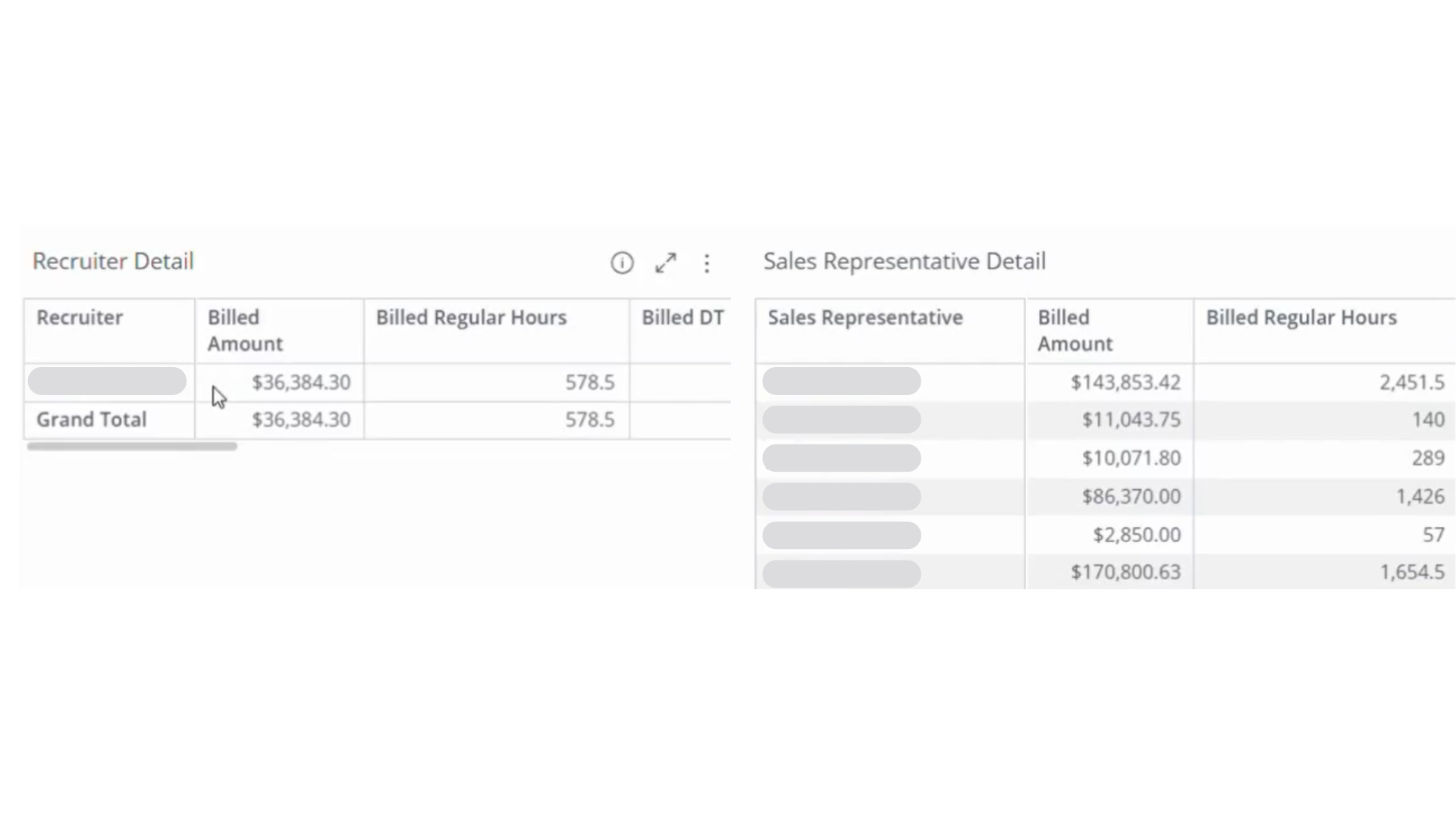
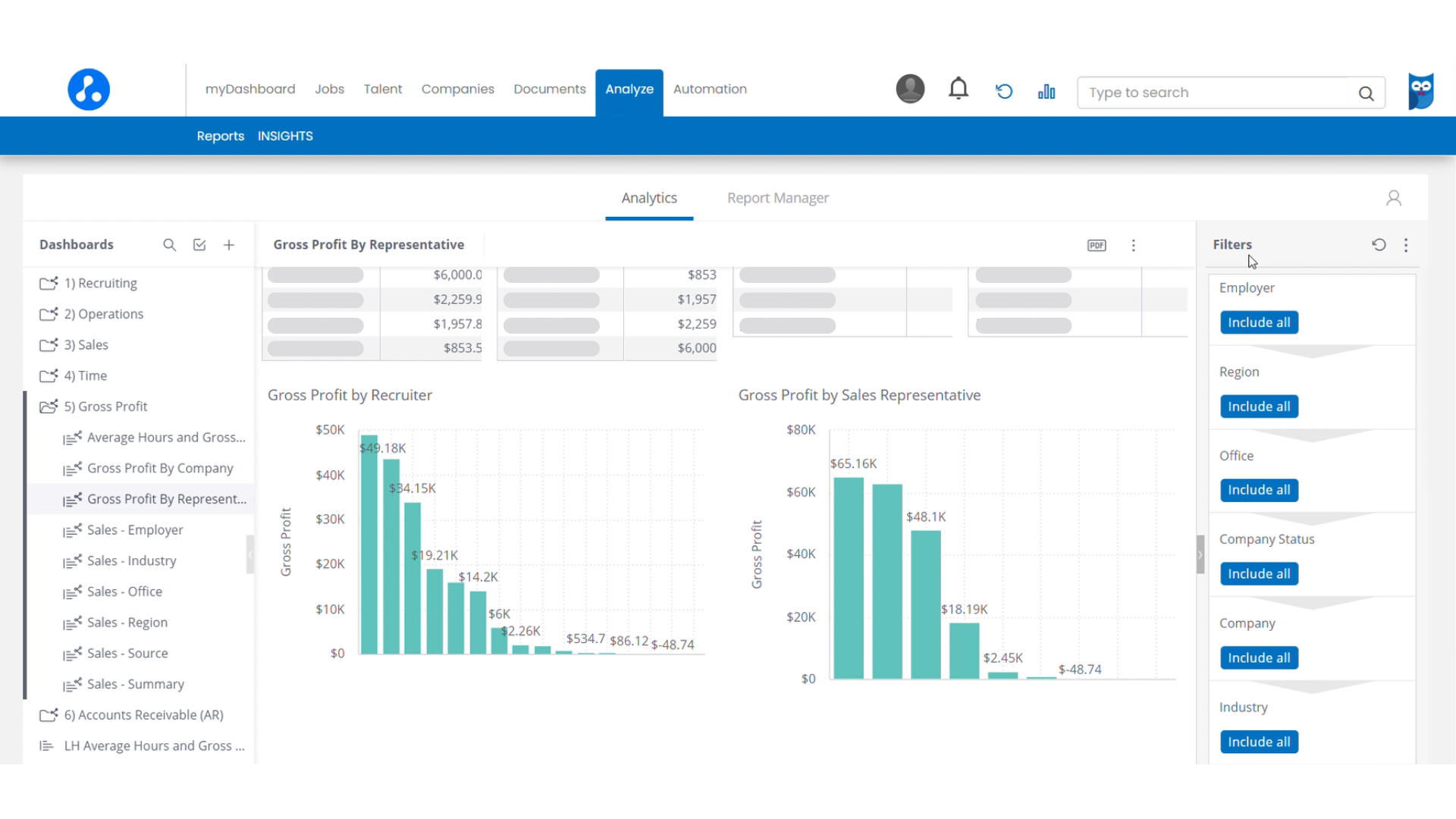
At Avionté, we’re making it easier than ever to track these key metrics through our powerful Avionté INSIGHTS tool. With INSIGHTS, you can effortlessly pull data, drill down by recruiter, and analyze performance at a granular level.
Check out our latest video to see how you can use this tool to implement best practices and create effective strategies for improving recruiter productivity and overall agency performance.
Next Steps
Want to see how a modern staffing platform can help your staffing business be more efficient? Schedule a free consultation call today.
Frequently Asked Questions
What is billable revenue per recruiter?
Billable revenue per recruiter is calculated by dividing total placement revenue by the number of recruiters—measuring each recruiter’s direct top-line contribution.
Why track gross profit per recruiter?
Gross profit per recruiter gauges real profitability by subtracting placement costs from revenue, helping leaders optimize for both growth and efficiency.
How do these recruiter metrics support growth strategies?
These KPIs help agencies scale by identifying high-performers, optimizing costs, and coaching recruiters on strategies that deliver measurable results.
Can Avionté help track recruiter performance over time?
Yes, Avionté’s Insights and Business Intelligence dashboards let you monitor billable revenue and profit metrics over time, enabling trend analysis and proactive coaching.
Are these metrics relevant for all staffing verticals?
Absolutely. Whether you’re in clerical, industrial, healthcare, or enterprise staffing, revenue and profit-per-recruiter metrics are essential for success.