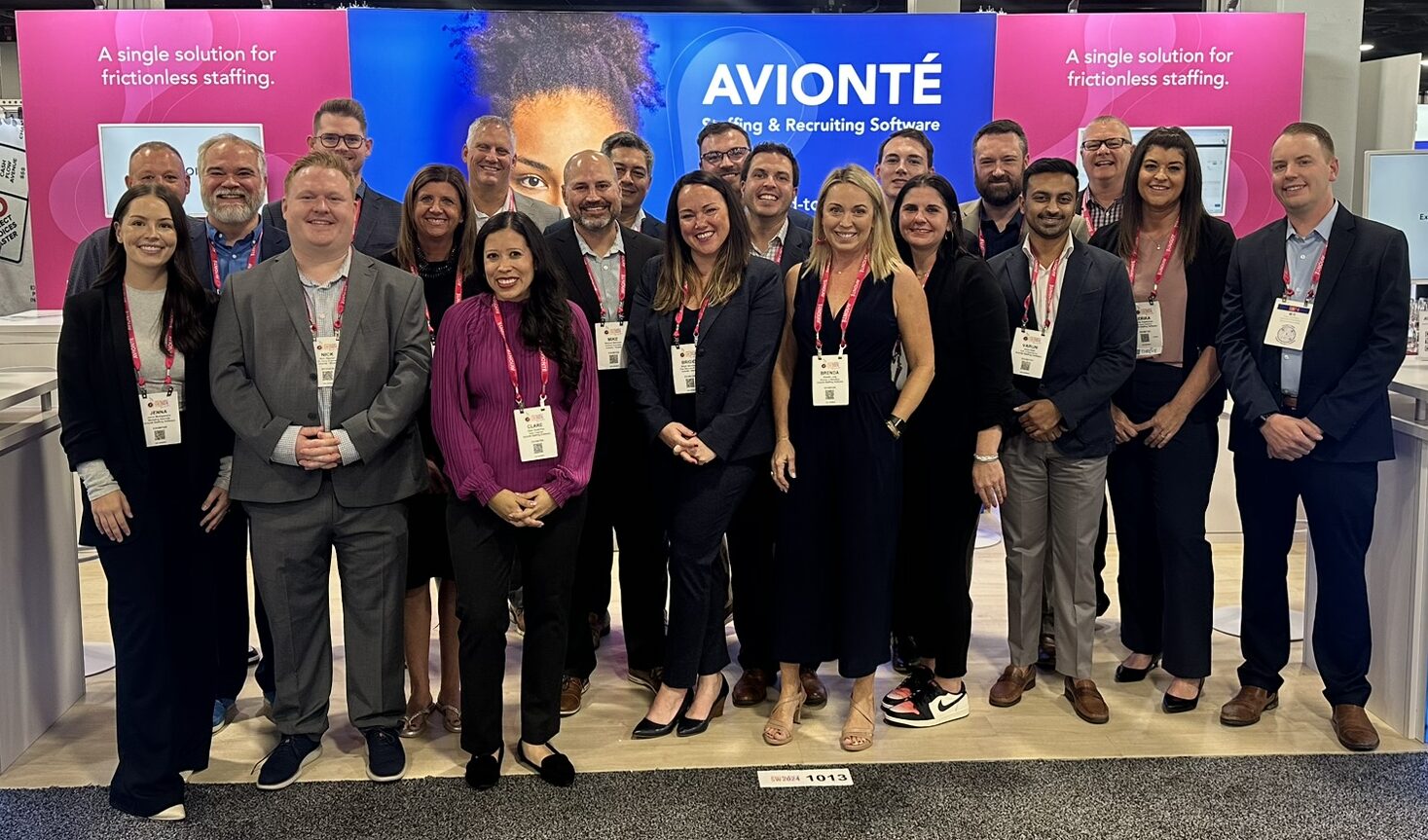
At CONNECT 2025, the focus was on one critical question: how do you elevate performance and deliver results in times of change? Wage inflation, technology shifts, immigration, and a new legal landscape are all creating a wave of disruption that’s reshaping the staffing industry. Our goal is simple: to help our customers turn these challenges into strategic business advantages. A big part of that is guiding agencies on a clear path to success with the most innovative AI-driven tools and solutions available.
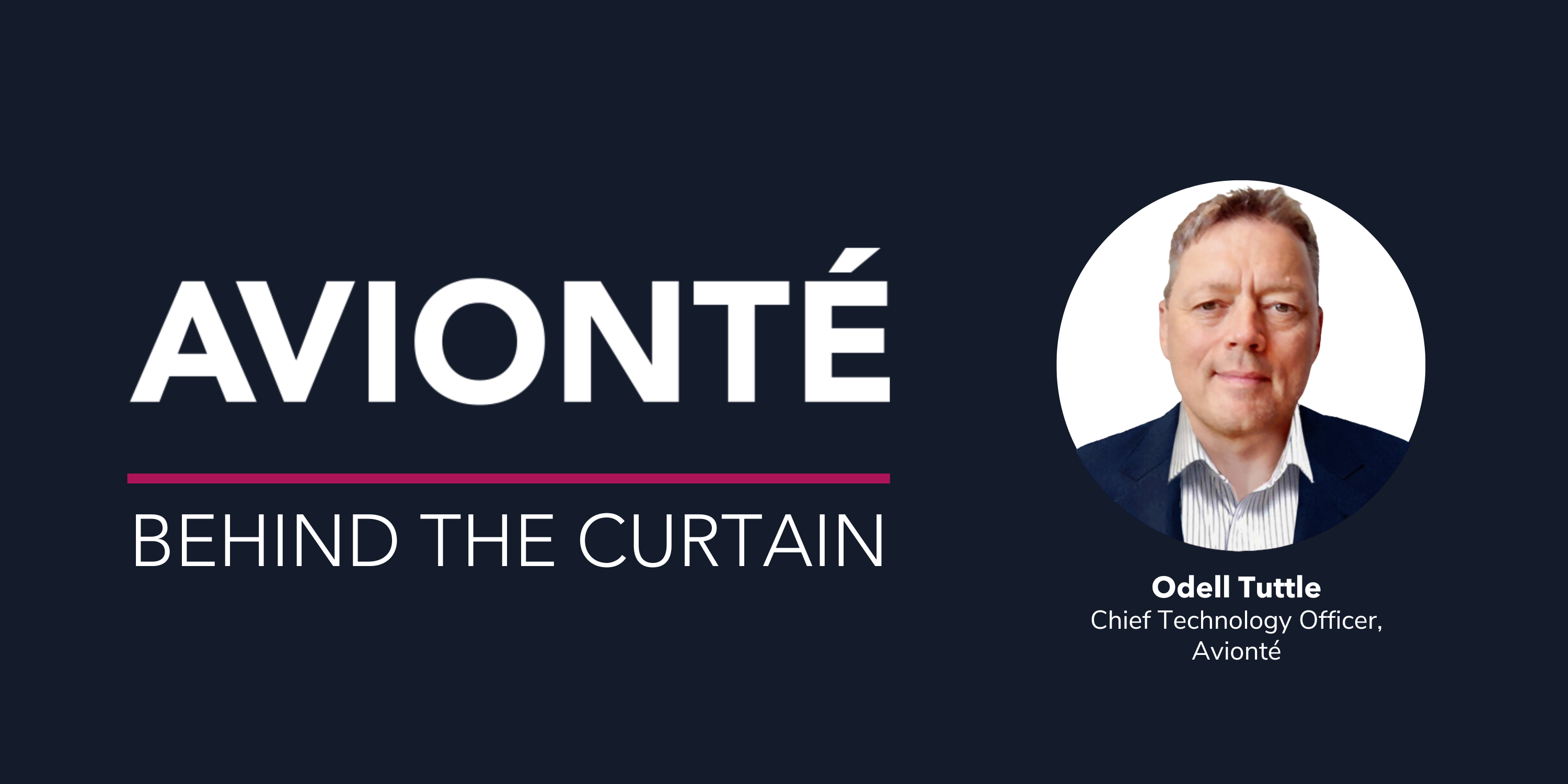
During this year’s CONNECT keynote, our Chief Technology Officer, Odell Tuttle, shared how we’re building the future platform for staffing—together. But what does that mean in practice? To unpack this question, Odell sat down with our Senior Content Strategist, Suzanne Sitelman-Arroyo, to discuss what makes our platform AI-ready, what that really means, and how Avionté is equipping clients to thrive in a rapidly changing industry.
Suzanne: Everyone talks about AI as this transformative technology, but throughout your keynote at this year’s CONNECT conference, and in your approach at Avionté, you consistently bring the conversation back to people—the team behind the platform, understanding how customers work, the human relationships that drive staffing.
In an industry where there’s so much hype around automation and algorithms, why do you keep centering on the human element?
Odell: Because this industry runs on relationships. Technology alone doesn’t put people to work—people do. Behind our software is a team of more than 90 engineers, architects, testers, and UX/product leaders who spend their days obsessing over how recruiters and talent actually work. You’ll see our team shadowing customers, mapping out workflows, asking questions that sometimes feel almost too detailed—but that’s how we find the friction and design better solutions.
And I’d add this: it’s not the technology that drives our customers; it’s our customers who drive the technology. Their feedback, their pain points, and the way they work—that’s what sets the roadmap. We’re not building cool tools for the sake of it. We’re building because customers are telling us what they need, and we’re responding with innovation that makes them more effective.
Suzanne: Staffing agencies today are facing a perfect storm of challenges—talent acquisition and retention struggles, pressure to adopt new technologies, evolving workforce expectations, and increasingly complex compliance requirements.
At the same time, employers are looking to agencies as their “talent technology providers,” expecting them to bring cutting-edge solutions to solve their staffing needs. Given all these mounting pressures, what makes AI not just helpful, but absolutely essential for agency survival and growth in today’s market?
Odell: Agencies are being asked to deliver more with less—close skills gaps, retain talent, keep pace with changing regulations, and meet higher expectations for speed and flexibility.
Honestly, if you’re holding back on leveraging AI capabilities, you’re already paying for it. The industry is seeing that agencies are losing up to 5% of their revenue monthly simply because they’re slower than competitors who are automating tasks and getting placements out faster. That’s a huge number.
Research has also shown a measurable performance gap of 30-50% between teams that actively use AI versus those that don’t. Think about what that means in terms of productivity. Same market, same recruiters, but half the output because you’re still doing things manually.
And it doesn’t stop there. When you don’t have automated reminders, nudges, and self-service in place, talent attrition rises. People drift away, or they don’t show up for assignments, because the experience just isn’t as smooth as what they’re getting elsewhere.
Compliance risk goes up too. Manual processes leave more room for mistakes—missed filings, incomplete forms, things slipping through the cracks. AI-driven checks and workflows help prevent that.
The tough truth is this: if you’re months behind, you’re actually years behind. The industry is moving exponentially, not linearly. While you’re hesitating, your competitors are not only adopting AI, but they’re also learning, iterating, and compounding the advantage. Catching up later costs way more than keeping up now.
Suzanne: You emphasize that agency tech platforms need to be “AI-ready.” What does that mean to you? And what specifically makes Avionté’s platform AI-ready?
Odell: AI can transform agency operations, but only if it’s built on a foundation that’s connected, adaptable, and secure. If you bolt AI onto fragmented systems, you get gimmicks—not results.
That’s exactly why we spent the last three years rebuilding AviontéBOLD to be AI-native. While there are major providers in our space trying to retrofit AI onto legacy systems — adding AI features to existing architectures that weren’t designed for it — we took a completely different approach.
We run on a unified data model because AI is only as good as the data it touches. In staffing, data is your goldmine. The smartest staffing agencies are using their data as a competitive advantage.
But, for many agencies, their data is often underused and unrefined. It gets scattered across front office, back office, mobile platforms, and vendors. Our platform unifies your data so AI has one trustworthy source of truth. Your historical patterns become predictive intelligence, and your successful placements become templates for future success.
But here’s the critical insight: clean, structured data is what separates powerful AI from noisy AI. We’ve spent three years ensuring that every piece of data flowing through BOLD is structured consistently, connected meaningfully so AI can understand relationships between talent, jobs, and outcomes, and updated continuously with feedback loops that improve data quality over time.
We’re also API-first. We didn’t just create APIs for integrations — we created APIs specifically designed for AI consumption. High-fidelity API specifications with structured, predictable responses, webhooks for real-time event notifications, and bulk API endpoints that allow AI agents to process thousands of records efficiently. If you can do it in the UI, you can do it via API. That’s how partners, automations, and AI services plug in cleanly.
On top of that, we completely rebuilt our search engine from the ground up using modern OpenSearch with vector search capabilities. This powers our technology to understand semantic meaning, not just keywords. When a candidate’s resume mentions “collaborated with cross-functional teams” and a job posting asks for “works well with diverse stakeholders,” the system recognizes these as similar even though they share zero keywords.
We didn’t start thinking about the rails after the train showed up. We laid them years ago so AI could run at speed. That’s why we can confidently say we’re developing Agentic AI that operates end-to-end, because our platform is designed for it from the ground up.
Suzanne: You also emphasized this in your keynote at CONNECT 2025 when you talked about how building an AI-native platform requires intentional architectural decisions made years in advance. Can you explain what that foundational approach looks like in practice?
Odell: This isn’t something you can retrofit. While our competitors were adding AI features on top of legacy systems, we spent years rebuilding BOLD to be AI-native. Every architectural decision, every data structure, every API endpoint was designed with one question in mind: “How do we make this intelligent?”
The real test came when we started deploying Agentic AI capabilities. Because our platform was designed for this from day one, we can deploy AI agents that operate end-to-end across recruiting, placement, onboarding, timekeeping, payroll, and billing — all in one unified system. Our agents have complete visibility and can automate workflows that would otherwise require manual intervention across multiple disconnected systems.
This foundation is why we can confidently say agencies using our platform will have a sustainable competitive advantage. It’s not just about having AI features — it’s about having AI built on infrastructure that was designed for intelligence.
Suzanne: So, what excites you most about the future uses and benefits of AI for staffing? You mentioned “Agentic AI”. For those who don’t know, can you help define what that means and share what you envision Agentic AI will be able to accomplish specifically for the staffing industry?
Odell: That’s a great question — let me break that down because Agentic AI is really the next evolution we’re seeing.
Agentic AI refers to artificial intelligence systems that can autonomously perceive their environment, make decisions, and take actions to achieve specified goals with minimal human intervention. Think of it this way: instead of AI that just responds when you ask it something, Agentic AI can actually work independently toward objectives you give it.
What excites me is this fundamental shift we’re seeing, we’re moving from AI that just helps you work faster to AI that can actually work like a skilled team member. That’s the power of Agentic AI.
Think about your best recruiter, the one who takes a job order and doesn’t just post it somewhere, but thinks through where the right candidates might be, proactively reaches out, builds relationships, and then presents you with a comprehensive, ranked list of qualified candidates. That strategic thinking, that proactive approach — that’s what Agentic AI can do.
But here’s what excites me most: we’re not talking about replacing that human expertise. We’re talking about amplifying it exponentially. Imagine your top recruiter working with AI agents that never sleep, never forget a detail, and can process thousands of candidates while he or she focuses on building the relationships that close deals.
We’re developing specialized agents. Think of them as specialists, not generalists. Talent Search Agents that continuously scan job boards, social networks, and your database to build candidate pipelines before you even post a job. Interview Agents that conduct initial screenings and present you with ranked, qualified candidates. Client Outreach Agents handling routine check-ins while escalating anything that needs human attention.
What’s revolutionary is that these agents can spot opportunities before humans can. They’ll identify which clients are likely to increase their contractor needs, which talent are most likely to accept new assignments, and which matches have the highest probability of success.
The real game-changer is moving from recruiting to fill individual jobs to recruiting to build comprehensive talent datasets. Instead of that reactive cycle, you’re proactively building pools of qualified talent using recency, frequency, and segmentation models. The shift becomes: how recently did they work for you? What’s their total lifetime value? What’s their likelihood of returning?
This isn’t science fiction. The foundational technology exists today. We’re building these capabilities into BOLD right now, working with AWS and Anthropic to create agents that can interface across all front- and back-office workflows, end-to-end.
The agencies that embrace this partnership between human expertise and AI capability won’t just be more efficient — they’ll define the future of our industry. That’s what has me genuinely excited about where we’re headed.
Future success will equal Agentic AI that is tested, verified, safe, and compliant. This measured, foundational approach is why early movers who implement proper agentic AI will build compounding advantages that competitors can’t easily replicate.
Suzanne: You’ve mentioned in previous conversations that both performance and security are table stakes, especially as you scale AI capabilities across your platform.
With the rapid pace of AI development and the pressure to deliver new features quickly, how do you ensure you can scale AI innovation without compromising on the security and reliability that your customers depend on? What does responsible AI scaling look like in practice?
Odell: Here’s the thing: if we’re doing our jobs correctly with AI, you won’t notice most of the changes. They’ll be picked up naturally. But that only works if the foundation is rock solid.
Let me give you some numbers that matter for AI at scale. We have 100,000+ weekly active users on our mobile platform. Four nines of availability — 99.99% — is our baseline. We routinely hit five nines, which is 99.999%. We’re delivering one-tenth of a second mean response times and handling over 50 million API requests per week. Year to date, we’ve done 775 deployments and counting.
Why do these numbers matter for AI? Because this level of performance and reliability is essential for AI agents that need to process data and make decisions across your entire operation. When we talk about Agentic AI that can work independently, it needs that sub-second responsiveness to be effective.
We’ve also improved page load times by 50%, because AI agents need that responsiveness to function properly in real-time workflows.
But performance is only half the equation. You put incredible trust in our team, and this trust isn’t granted automatically — it’s earned. We are SOC 2 Type II certified and continue to do audits and assessments for things like ISO, CCPA/CPRA, GDPR, PCI, and CIS. This includes both Avionté and SimpleVMS.
We can — and have — supported clients through major cyberattacks and continue to partner to make your businesses secure. But security for AI requires additional layers: model security, data privacy in training, audit trails for AI decisions, bias monitoring, and compliance that spans both employment law and emerging AI regulations.
When it comes to AI specifically, we take a privacy-first approach. Your data stays your data. We build on Anthropic because they’re an AI Safety & Research Company focused on responsible AI development. Additionally, they’re a public benefit corporation. Our AI policy is published and transparent.
We’re also building in transparent AI decisions, meaning you can see how and why AI makes recommendations. Human oversight remains at every critical decision point, and we maintain built-in safeguards for employment law, privacy regulations, and industry standards.
Here’s the bottom line: companies rushing into AI too quickly are taking on significant compliance risk. We’re taking a safe, measured approach because if people can’t trust the system, they won’t trust the AI. Security and performance aren’t just technical requirements — they’re the foundation that makes AI adoption possible at scale.
Suzanne: To wrap up, any final advice for agency leaders who are still figuring out their AI strategy?
Odell: Don’t wait for “perfect.” AI won’t replace recruiters — but recruiters who don’t use AI will get outpaced by those who do. With nearly nine out of ten agencies already using it, standing still is moving backward.
Here’s my final thought on this: There’s a lot of noise in the market right now about AI tools and solutions. Isolated AI features won’t cut it in the new landscape. It’s the foundation we’ve been building for three years that makes everything possible.
Every small enhancement has been designed with this moment in mind. We’re not building machines to replace you. We’re building tools to make you better at what you do. AI doesn’t take your job. It expands your reach.
AI is the way forward, and we’re building it with you, not for you. We’re not just your technology partner — we’re your competitive advantage.
We want our customers to be the best staffing pros out there, and we believe using our platform is the key tool that will drive that success. When our customers win, we win!
Odell Tuttle
Chief Technology Officer at Avionté
Odell Tuttle oversees the technology teams, tools, and processes that provide the foundation of the Avionté platform. This includes software engineering, cloud infrastructure, and information technology. Odell brings over 28 years of experience building and operating large-scale software platforms.
Suzanne Sitelman-Arroyo
Senior Content Strategist at Avionté
Suzanne Sitelman-Arroyo is an award-winning, multi-channel digital marketing executive and content strategist with a proven track record of building brand awareness and driving customer engagement across industries. As Senior Content Strategist at Avionté, she leads the company’s content marketing strategy, positioning Avionté as a leader in the staffing industry and overseeing content initiatives across several channels.