Leading staffing agencies know that technology adoption can simplify workflows, boost efficiency, and deliver better outcomes for both clients and talent. But many struggle with the “how.” Even after going through the effort of selecting the right tech, only half the equation is solved.
Will my staff adopt it? How will it fit into their daily workflows? How do I overcome internal resistance to achieve expected ROI? The truth is the right AI tools and staffing technology can only take you so far – you also need the right internal support and a vendor team that ensures your goals are realized. Technology alone isn’t enough; it’s the people behind it that make the difference.
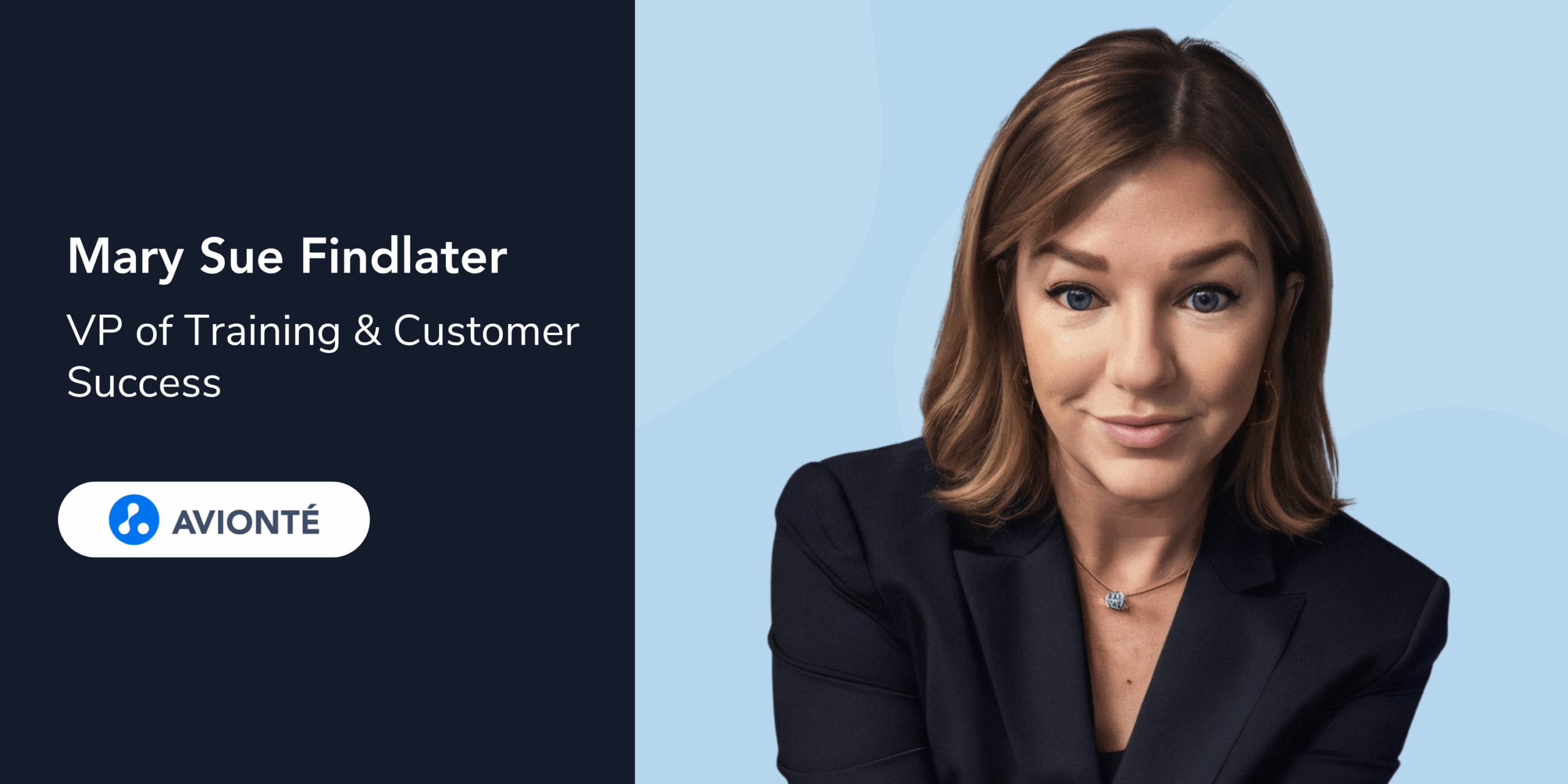
At Avionté, great customer service has always been a focus, but we wanted to dig deeper to understand what truly drives it. To do that, our Senior Content Strategist, Suzanne Sitelman-Arroyo, sat down with our VP of Customer Success and Training, Mary Sue Findlater, to get her perspective on what fuels exceptional customer support and how she and her training team are working behind the scenes to deliver it.
Key Takeaways:
- Technology alone isn’t enough – people and support make the difference. Leading staffing agencies may invest in AI and tech solutions, but adoption and real ROI depend on having the right internal change champions and vendor support. Avionté emphasizes partnership, authentic engagement, and personalized training to ensure tools are used effectively.
- Training must be practical, personalized, and ongoing. Avionté combines live trainers, micro videos, simulations, best-practice guides, and story-driven lessons to meet different learning styles. Training is phased, hands-on, and tailored to each agency’s workflows, helping users apply new skills immediately and reinforcing learning over time.
- The right change management strategy, combined with a personal touch, will drive adoption and needed outcomes. Recognizing that change can be difficult, Avionté works with internal champions to provide ongoing, just-in-time learning. The focus is on understanding the “why” behind tasks, not just the “how,” ensuring agencies stay competitive and achieve meaningful business results.
Suzanne: Mary Sue, you’ve been VP of Customer Success and Training at Avionté for the past two years. What does that role really mean, and how do you bridge the gap between technology, implementation, and client success?
Mary Sue: I see our team’s role as translating tech speak into everyday language because that’s how we best receive information. We’ve created multiple training options so we can take a new product you’re implementing and adapt it to fit your workflows and the way you actually do your job. Our goal is to make this transition seamless because we know our customers already have full-time jobs, and we’re here to make the learning process as smooth and efficient as possible.
So, we take those complex technology concepts and put them into practical, actionable knowledge. We like to teach in the framework of customer stories: how they come into their day and what they are trying to accomplish. Is it creating a job? Following up? Onboarding new talent?
We take our technology and make it meaningful to their real goals – from A to Z, in plain terms. That’s our purpose, whether we’re delivering it through a knowledge base article, webinar, video, or courses.
Suzanne: That’s a nice way of putting it – taking tech speak and translating it into “human speak.” But you do make it sound so simple, and that’s actually not always so easy to do. It does take a certain level of skill in and of itself.
So, how does one evolve into this role? In your specific case, how did you come into your role and what makes you successful at bridging that gap?
Mary Sue: I’ve always gravitated toward teaching. I love that aha moment. I kind of feed off of it, both with internal personnel and our clients. If I can get that aha moment with a client and see that their day is going to get easier, that’s what fuels me and my entire team.
I started out as a trainer at my previous company, and when I joined Avionté, I came on as an internal trainer. My role was to take the product knowledge straight from the people who build the technology and translate it into plain, practical terms for the rest of the organization.
Over time, that work naturally evolved. I eventually moved into leading our team of trainers and have spent the past few years shaping and refining our overall training strategy.
Suzanne: And what about the team that you manage. What does the training team consist of at Avionté?
Mary Sue: Our team is split into two sub-teams. We have a content team and our actual trainers. Our trainers are the boots on the ground – they’re who you’ll experience face-to-face for on-site training or virtually. You’ll have a personal relationship with them, and they’ll guide you through implementation training or help with specific topics in a hands-on way.
Our content team develops the multiple modes of training we offer – Avionté University LMS courses with simulations, best practice guides, micro videos, knowledge base articles, and release notes. They focus more on written training as opposed to live interactive training. It’s really written versus verbal, but we work together as one highly collaborative team. We can’t have things sit in silos.
Suzanne: It sounds like not only is there a lot of focused support, but there’s also a tremendous variety in the support you’re offering to meet the needs of different types of learners. So, do these teams collaborate often?
Mary Sue: Absolutely. We’re constantly sharing knowledge across the team. Over the past couple of years, we’ve really expanded the ways we deliver training because we know people learn in different ways.
I’m an auditory learner myself, but others prefer to read, watch videos, or get hands-on with the product. We take all those learning styles into account and build content together as one team to make sure everyone can learn in the way that works best for them.
Suzanne: Given your role as the bridge between product development and how our customers actually use technology, you describe it as being in a unique position to see both sides.
So, from that perspective: is technology transformation in staffing overhyped, or are we seeing a real shift in how people work and hire today?
Mary Sue: We really do see it as a fundamental shift. We’ve seen clients have extreme success using things like the AI interactive bots or recaps it can do to build summaries about clients.
And we do understand that change is hard – for everyone. Anytime there’s new technology or change, there’s resistance. But we always say, it’s not replacing the foundational human element of staffing. That will always remain. Instead, it’s about amplifying what you as an individual recruiter can do day-to-day to make the job faster, easier, and more efficient. And these days, if you’re not adopting the right tech to make you more productive and efficient, you will definitely be left behind.
Suzanne: Even for people who aren’t naturally skeptical about technology, there’s often doubt around change management, whether training will really lead to success. A lot of that comes from what many call “checkbox training.” You have your team watch a webinar, take a quick quiz, check the box, and move on, but that approach rarely results in real confidence or comfort with the technology.
So, how have you and your team approached training differently to make it truly effective?
Mary Sue: I completely understand the skepticism. I feel it myself sometimes. Think about when you get a new gadget and toss the instructions because you think, “I got this.” In staffing, it’s similar. This is a long-established industry, and people often feel they already know the workflows.
On top of that, many skip training simply because they don’t have time to read through long, complicated manuals or sit through an hour-long webinar just to understand something very specific. They need quick, focused guidance they can apply immediately. Otherwise, it’s easy to tune out and then end up Googling solutions at midnight.
So, at the start of 2025, we took a step back and asked ourselves: how much information are we giving people when they’re first starting out? The answer was… too much. We realized overwhelming new users doesn’t create success. So, we stripped it down to the essentials: just what someone truly needs to get started immediately after implementation. Our live trainings and courses are focused, practical, and manageable – nothing extra.
Then, 30 to 60 days later, once users have real experience in the system, we layer on more advanced content. That’s when they dive into our 201 webinars and written resources: bite-sized lessons that build long-term success. By pacing learning this way, people discover what they don’t know through experience, rather than being overwhelmed at the start.
Suzanne: You mentioned before that you’re an audio learner. I’m a hands-on learner myself. How do you design training for diverse learning preferences?
Mary Sue: During implementation training, you have a dedicated trainer who has pulled up your unique environment. They’re looking at your database, your job postings, your placements, and so on. We start by having everybody log in to that environment. We’re following along the whole time, tapping into auditory learners by speaking, whether virtual or on-site, but we’re also hands-on doing it.
We build in time to pause from the curriculum and have a moment where they practice. “Let’s take what we learned and apply it right now while you’ve got the instructor here to raise your hand and ask questions.” That’s one approach to hands-on learning.
The second is our Avionté University courses with simulations that are free-risk, so you can’t mess anything up. You can practice, and the simulations test your knowledge. Did you do it right? Go retry. It needs to be done in this order. The simulations combined with hands-on training really appeal to that hands-on learner.
Suzanne: It sounds like Avionté looks at every client specifically and works with them to provide something custom to their needs. Is that correct?
Mary Sue: Absolutely. When we engage with clients for implementation training, they get a dedicated trainer. Behind the scenes, that trainer meets with the implementation specialist to really learn about the client. What industry are they in?
Our trainers also do a lot of homework. They go to the staffing firm’s website, learn about their industry, even look at their job postings. When we’re crafting that unique training, we’re training them in their industry with real examples from job postings they currently have on their website, with the workflows the implementation specialist and client have identified together.
We have a series of calls with the actual client to identify how the agenda should go. We have a good foundation for an agenda, but if a client says, “This compliance piece is really important. We want to elaborate on this,” we dig in to understand what makes them unique so we can teach them the way they’re going to be doing their job – not in the way we think they should be using BOLD, but in the way they’re truly going to be executing.
If we don’t teach them in a way that relates to how they come in, sit down at their desk, and do their job, then the training’s going to be totally lost.
Suzanne: That’s important because one of the backlashes against “out of the box” systems is, “My agency does things differently. How do I know your training will work for my specific workflows?”
So, you’re saying you deliver a certain level of customization when developing training materials and showing them how the tech fits into their specific way of doing things. You’re not just throwing generic manuals at them?
Mary Sue: Exactly. We always look at things from their actual work environment, so what they learn is something they can use right away. Even in smaller sessions, when it’s not part of a full implementation and someone just wants help on a particular topic or product feature, we still do a quick scoping call to really understand their needs. That way, the session is relevant and tailored to them.
And honestly, that personalization isn’t just a nice touch. It’s what makes the training truly stick.
Suzanne: So, change management is a big part of the challenge, especially when recruiters have been doing things a certain way for years and don’t have much time to pause hiring and placements to learn new platforms and solutions.
What advice would you give agencies for navigating these hurdles and making a successful transition without slowing down productivity?
Mary Sue: Change management is one of my favorite topics because we’ve seen so many clients be very successful with it. The most successful clients have what we call a “change champion” – a dedicated person within the organization leading the charge on implementation. They understand the “why” behind the new platforms, understand the workflows, and help make sure the whole team adopts them.
You see, staffing firms already have their workflows identified, so what they need to know is how they will fit into the new software? That’s what the change champion develops, and our trainers work with that champion to implement and execute those workflows. We teach your team in your workflows, not general, fake workflows, but the ones your change champion specifically identified.
We’ve also seen some creative approaches to help motivate teams to adopt change. One client turned it into a competition about adoption. They identified workflows, trained their team, and gamified our LMS courses. The people who got the highest scores, who completed courses the best, won a prize and bragging rights.
Everybody loves a game; I don’t care how old you are. Having that dedicated change champion to drive adoption, make it creative, and gamify it really creates engagement and gets people excited.
Suzanne: So, what you’re saying is that having someone within the agency who really understands the business’s specific workflows is key to successful adoption. Because every staffing agency is different, having that person helps the team start using the software effectively from day one without disrupting productivity.
Mary Sue: Exactly. When you combine our engaging content and multiple training modalities with the guidance of a change champion, the whole process becomes much less intimidating and more manageable. It helps take the fear and resistance out of something new – which is completely normal.
Suzanne: So training is really about partnership: partnering with the client in a very intimate way to customize training and ensure success?
Mary Sue: Absolutely. It really comes down to partnership and authenticity. Authenticity matters because our trainers have been recruiters themselves. They can be upfront about their own struggles and really relate to the learners – understanding their day-to-day pressures, what they need to get done, and the challenges they face. That’s what lets us work together as real partners to solve problems.
Our trainers have been in the exact same roles our clients are in. They know the struggles firsthand and how to make a recruiter’s life easier. They ask the right questions: What approach makes sense for this client? Which learning style will click? How will they measure success? That helps set people up for real results.
We emphasize this internally: meet people where they are. Be professional but also understand frustrations. We get it — you come in thinking, “Oh my gosh, all this manual work.” And we can say, “Yep, I’ve been there. Let’s solve this together. Here’s a strategy – let’s try it.” That kind of authentic connection turns frustration into partnership, and partnership into real success with the technology.
We combine that expertise with genuine care for your business. Trainers have walked in your shoes and want to make your journey smoother than theirs was. I hear it from our team all the time: “When I was recruiting, I wish someone had shown me this – now I get to share it.” That’s the “aha” moment, the authentic human connection. It’s not just business; it’s people helping people.
Suzanne: So, we’ve talked about training success and what it takes to create it. But how do you measure it and its impact on business outcomes? How do you know that what you’re doing is actually working?
Mary Sue: I’d say measuring success is an ongoing challenge – not just for our team, but for the industry as a whole when it comes to applying learning. We’re constantly refining our approach. For example, at the start of 2025, we did a complete overhaul to be more intentional about how we deliver training.
We track completion rates for our Avionté University courses and quiz scores to see how well concepts are understood. We also watch engagement patterns closely. If people are coming back for those 30-minute webinars that build deeper knowledge 30 to 60 days after going live, we know they’re finding value.
And feedback is everything. I know it can feel like one more thing to do, but to us, it’s gold. Every piece of constructive feedback is reviewed, and nine times out of ten, we act on it. Messages like, “This saved me two hours in a day” – we live for those. We can see a direct link between engaged learners and fewer support tickets around those topics.
My biggest ask to learners is simple: never be shy about giving feedback. We can’t improve if we don’t know what’s working and what isn’t. Training isn’t just a box to check. To make it meaningful, we build our sessions around storylines. People love following a story – it resonates and makes it easy to see themselves in it. We want learners thinking, “That’s me. I struggle with that. And now here’s a solution.”
Suzanne: It sounds like training at Avionté is always a journey. You’re constantly refining it. You even mentioned performing a complete overhaul of the way you deliver content just this year.
So, what are some of the concrete changes you’ve made recently to make training better, and have you seen improvement in those success measurements?
Mary Sue: One of the biggest changes we’ve made is breaking things into bite-sized pieces. We live in a world driven by social media – three- to five-minute TikToks, Instagram videos, and quick LinkedIn posts. We get hit with information all day, so attention spans are shorter. Layer that on top of a full-time job, and expecting someone to dedicate 16 hours a week to learn AviontéBOLD? That’s just not realistic.
We wanted to be intentional about delivering small, digestible pieces of content that create “aha” moments without overwhelming anyone. That’s why we’ve focused on micro videos. We try to include one in almost every knowledge base article. You can watch it in under three minutes and then read more if you want to.
We also organize these micro videos around workflows, because no task happens in isolation. People sit down at their desks and work through a story for the day – a list of things to do and a resolution. Our goal is to take a workflow and turn it into a story you can watch and understand in under ten minutes.
Alongside micro videos, we’ve introduced best-practice checklists. They show you how to execute tasks in BOLD the recommended way, helping users reach success faster. We’ve also revamped our entire Avionté University LMS, so you can navigate courses in chapters with storylines and simulations. That way, you can practice in a no-risk environment before doing it live.
Suzanne: So, it’s like what many call “just-in-time” training. Maybe you understand 60%, but right when you need to do something specific and you’re not sure how, you can easily find it in our resources?
Have you seen this help in terms of customer success and engagement scores?
Mary Sue: Definitely. Measuring success is tricky, but the biggest thing I look at is attendance for those short webinars. If we’re constantly having high registration numbers – whether people attend live or get the recording – we know they’re going back and watching because they proactively signed up. That’s a good indication we’re doing it right.
We also stopped producing hour-long webinars and shortened them to 30 minutes so you can more easily attend on a lunch break. We’re hosting two to three of those a month so you can continue layering up your knowledge.
Suzanne: Do you have an example of a customer who’s recently said the training has really helped them adopt well?
Mary Sue: We recently had a large enterprise client share with us, and these survey comments are truly gold to us, that the training was informational and well-organized. The most valuable part they found were those hands-on examples where our trainers laid out clear expectations with that hands-on approach, carving out time in the training to have everybody practice together and ask questions in real time. They said it made it easier to understand and apply the concepts because they could practice right then and there.
Suzanne: And they saw how the technology could help their business through that training?
Mary Sue: Absolutely. And it gave them the opportunity to ask questions in real time as they were doing it.
Suzanne: So, let’s say it’s a year out from implementation and initial training, and a customer is having trouble applying some specific application to their workflow, is there a way to reach out for additional support?
Mary Sue: Absolutely. We love those opportunities to come back in and home in on a specific topic. We call those on-demand trainings. They are not part of a full implementation, but instead, help you focus on an area that needs smoothing out.
And we do this with the same level of personalization you experienced when going through initial training, where you have a dedicated trainer who hosts a scoping call to identify your needs and what you’re trying to get out of the training. They set the goal, we backwards engineer to that goal, come up with the agenda together, and deliver it in a way you need to be successful.
Suzanne: So, at Avionté, it’s not like you train someone for six months and then leave them on their own. Training is more of an ongoing process.
Mary Sue: Absolutely. Training doesn’t stop. It’s always available for as long as you’re using our products.
Suzanne: With all the technology changes, updates, and evolutions we’re constantly making to our product, how on earth does your team keep up, nevertheless translate it into training?
Mary Sue: It’s definitely a heavy lift, and honestly, every tech company struggles with it. Our team’s in a pretty unique spot, though. We’re the first people outside of product development to see new features. We’re right there with the product team on the development cards, and we don’t just learn the features – we write the documentation and release notes ourselves.
Every week, we get together with development and trainers to talk through use cases and best practices. That way, we can give clients insights that go way beyond the basic “here’s what this feature does.” We’re showing them how to use it strategically in their day-to-day work.
Suzanne: So, that’s one challenge. The second challenge I want to ask you about is: how do you communicate all these new features and updates without overwhelming clients?
Mary Sue: This has been a very big focus for us in the past couple years. We’ve heard our clients crystal clear: “No more surprises. We want to know what’s coming down the pipeline before it hits so we can prepare our teams.”
Recently, as a big focus of Q4, we’ve been working on upcoming product releases that allow our clients to preview changes weeks in advance. We’ve tagged items as “coming soon” in our client communications.
This can be found in Avionté and AviontéBOLD under the release notes, in our KB articles, and in the BOLD Bulletin. It gives everybody time to mentally and operationally prepare for changes. We really did this to respect our clients’ time and help them plan efficiently.
Suzanne: So, as we’re moving toward year-end, where do you think training is headed at Avionté as technology continues evolving?
Mary Sue: Like I mentioned, we’re always moving toward bite-sized, just-in-time learning that fits right into your workday. We know this is on top of everything else you’re doing, so we’re very mindful of that. And when it comes to AI tools, our goal isn’t to replace you – it’s to help you work smarter and more efficiently. In fact, we truly believe that those who embrace technology will become more efficient, while those who don’t risk being left behind by those who do.
So, when it comes to training, we don’t just want to show you how to click through the product. We want you to understand why you’re doing it. Knowing the “how” is useful but understanding the “why” is what sparks that real “aha” moment and helps you maximize your impact.
The other thing to know is that change management is top of our minds as well. We acknowledge that change is challenging, change is friction. We’re not in denial of that. But we think we can be your partner to make it more manageable and even exciting. We’ve got so many different modalities, bite-sized pieces, and we include humor. We want our clients to understand we’re going to be a partner that understands their industry.
So, for us, the future of training is all about that personal touch – working with a dedicated trainer, breaking practical applications into bite-sized lessons, and delivering them at just the right time to help people succeed.
We believe this approach not only drives technology adoption and ensures users get the most out of the tools they’re using but also helps them remain competitive in this industry by delivering real outcomes and achieving meaningful success.
Mary Sue Findlater
Vice President of Training & Customer Success at Avionté
As VP of Training & Customer Success at Avionté, Mary Sue is driven by a simple belief: learning should meet people exactly where they are. Her approach to training breaks the mold of sterile, one-size-fits-all delivery. She believes staffing is fundamentally about people—and Avionté’s training should reflect that human element. By bringing authenticity, relatability, and yes, a bit of quirk to every interaction, the Avionté training and customer success teams create learning experiences that resonate on a personal level.
Mary Sue is passionate about the staffing industry and dedicated to ensuring our clients don’t just understand our software—they feel confident, supported, and genuinely excited about how it can streamline their work.
Suzanne Sitelman-Arroyo
Senior Content Strategist at Avionté
Suzanne Sitelman-Arroyo is an award-winning, multi-channel digital marketing executive and content strategist with a proven track record of building brand awareness and driving customer engagement across industries. As Senior Content Strategist at Avionté, she leads the company’s content marketing strategy, positioning Avionté as a leader in the staffing industry and overseeing content initiatives across several channels.