An Interview with Montasir Azad,
Principal Security Architect at Avionté
How worried should staffing agencies be about cybersecurity? It’s not a top-of-mind concern for growth-oriented staffing executives, but it should be. Employers and talent alike expect the agencies they do business with to protect their critical data. And staffing agencies are a treasure trove of such data, from Social Security numbers and banking information to business and competitive intelligence. Vulnerabilities are everywhere: weak passwords, unpatched systems, misconfigured software, and human error.
There is a reason why smart employers now review data and cybersecurity as part of their vendor due diligence. And from a staffing agency’s perspective, a data breach is one of the few black swan events that can shut your business down permanently or cheat you out of a year’s worth of income.
The bigger story—and one which is rarely reported in the business press—is that data theft has become a vertically integrated global industry. We are talking about organizations with multi-national technology teams, programmable AI bots, service departments to assist ransomware victims with payment arrangements, and boiler rooms filled with front-line “sales” agents whose sole intent is to steal usernames and passwords using a variety of phishing and social engineering techniques.
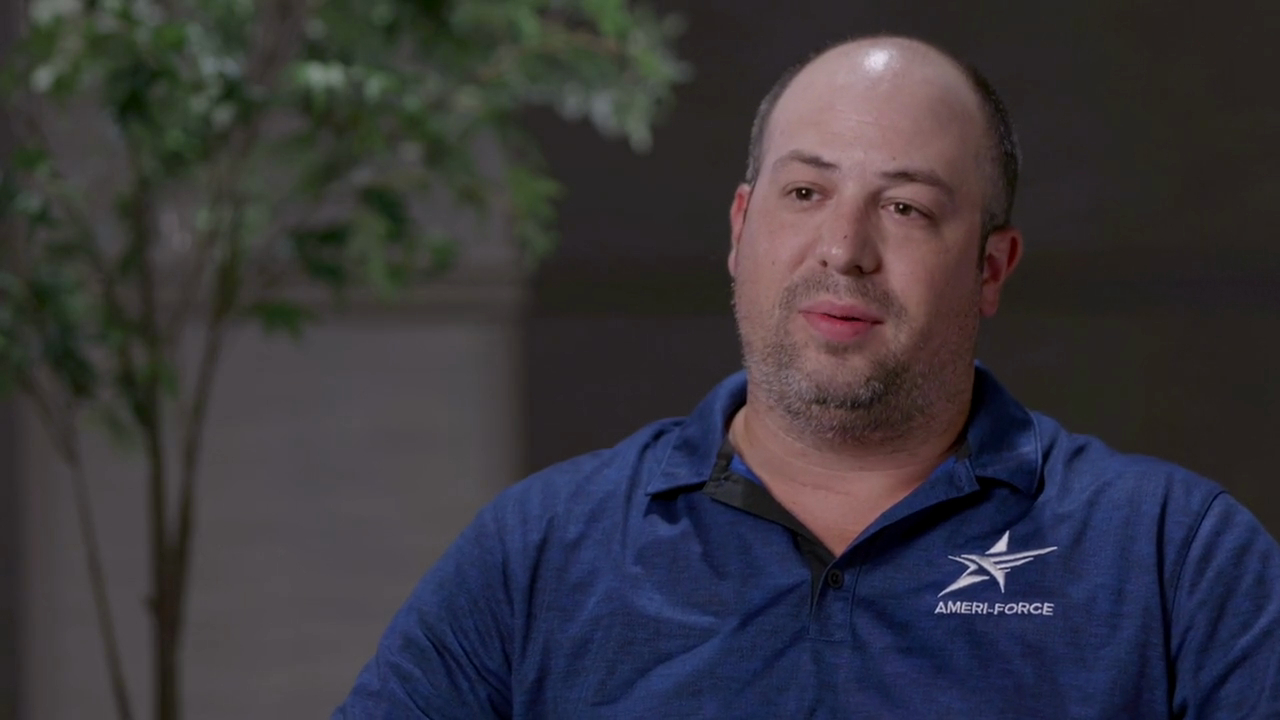
To unpack these risks and share actionable strategies, our Chief Strategy & Marketing Officer, Christopher Ryan, sits down with Montasir Azad, Principal Security Architect. They discuss why staffing agencies are such attractive targets, the most common vulnerabilities, and what agencies can do to protect themselves, from addressing human error to implementing multi-factor authentication and secure cloud-based systems.
They also explore how choosing the right technology and security partners can be the difference between staying in business and becoming another cautionary headline.
Chris Ryan: Montasir, when I talk to staffing agencies, and especially the smaller ones, they’ll say, “We’re too small for hackers to care about. They’re after banks and large corporations, not a 20-person staffing office.” Is there any truth to that?
Montasir Azad: Honestly, that’s one of the most dangerous myths in business today. Hackers don’t sit around picking targets one by one. They run automated tools that scan millions of systems 24/7, looking for easy ways in. They don’t care if you have ten employees or ten thousand.
It’s like leaving your front door unlocked, whether you live in a mansion or in a small apartment. In cybersecurity terms, an unlocked door is an unpatched server, a weak password, a misconfigured firewall, or any homegrown system with gaps in security.
These scanning bots simply look for open doors and strike. In 2025, 43% of all cyberattacks targeted small businesses, and those with fewer than 100 employees are seeing 350% more attacks than large enterprises.
So no, you’re not flying under the radar – you’re right in the middle of it.
Chris Ryan: Ok, I get the vulnerability, but what exactly do hackers want from a small staffing agency? I mean, they’re not banks. What’s the ROI?
Montasir Azad: Even the smallest staffing agencies store enormous amounts of personal and financial data – Social Security numbers, bank info, background checks, addresses, health information. All of that sells on the Dark Web or fuels identity theft. From a hacker’s perspective, if you run a staffing agency, you’re sitting on gold.
Why hit a bank when you can hit an agency with thousands of candidate records? One breach, and you’ve got a data set worth real money.
Chris: Ryan So, this isn’t just hypothetical. Are there real-world examples of staffing companies being targeted? And if so, what happened in those cases?
Montasir Azad: Absolutely. There are several notable cases in the public domain.
PPM Recruitment in the UK was breached in 2025. Artech Information Systems, which pulls in $800 million in revenue, got hit twice by different ransomware groups because they didn’t fully clean up after the first one.
One staffing agency faced a half-million-dollar ransomware payout because multi-factor authentication wasn’t enabled. If billion-dollar agencies are getting hit, small ones with limited resources are even more vulnerable, especially if they rely on homegrown or self-hosted systems that lack enterprise-grade monitoring and patching.
Chris Ryan: So, these are some of the more high-profile cases. But what does financial damage look like for a typical small agency—or any small business for that matter?
Montasir Azad: On average, small to medium businesses lose about $254,000 per breach, and 60% shut down within six months of an attack. For U.S. companies overall, the average cost has climbed to $10.22 million, which is an all-time high.
Worse, it takes 241 days on average to identify and contain a breach. That’s eight months of someone possibly moving through your systems unnoticed.
Chris Ryan: Eight months–Seriously? How could a hacker sit inside your system for eight months?
Montasir Azad: Because attackers are stealthy now. They move quietly, use legitimate tools, and blend into your normal operations. Nearly 79% of today’s attacks are malware-free. They’re just using your own software against you. Small agencies often don’t have 24/7 monitoring, incident response teams, or forensic experts.
Maybe they’ve got one IT generalist juggling everything. Hackers know smaller organizations are easier, faster, and quieter to exploit.
Chris Ryan: So, what about the aftermath? Beyond the financial hit, what’s the full impact of a breach? What happens day-to-day for a staffing agency when its systems get compromised?
Montasir Azad: It’s chaos. You’re calling candidates to tell them their Social Security numbers were stolen. You’re notifying clients. Regulators get involved. You might face lawsuits. And you lose the trust of both your clients and your employees.
In staffing, 29% of breached companies lose customers permanently. Trust is everything in this industry. Once you lose it, it’s almost impossible to rebuild.
Chris Ryan: Let’s talk about the weakest link. With all these firewalls, monitoring tools, and other security systems in place, where do things typically break down? Is it the technology itself, or is it something else entirely that makes companies vulnerable?
Montasir Azad: Actually, your weakest link is not often your technology. It’s your people!
Every study shows it: 68% of all data breaches involve human error. Not sabotage, just mistakes: clicking a phishing email, using weak passwords, misconfiguring cloud services, or improperly maintaining homegrown applications.
When we run phishing simulations, one-third of untrained employees click the malicious link, usually within 21 seconds. That’s how fast it happens.
Chris Ryan: Can you give an example of how one small human mistake or user error can snowball into a massive problem?
Montasir Azad: Well, the one case I mentioned before is a perfect example of that. Multi-factor authentication wasn’t enabled, so just one password got stolen, and boom: $500,000 gone.
Or take the massive AWS outage in 2025 – 113 services went down for 15 hours because of a simple configuration bug. Even the biggest players make mistakes.
And passwords? 81% of breaches involve weak or stolen ones. Most people have around 100 passwords and end up reusing them. Once a hacker gets one, they don’t stop. They try it everywhere, which is how a single stolen password can end up giving them access to multiple systems at once.
Chris Ryan: I’ve heard phishing is behind most attacks. Is that true?
Montasir Azad: Not only is that still true, but it’s also actually getting worse. 91% of cyberattacks start with phishing. Attackers now use AI to make fake emails hyper-realistic. Studies show AI-written phishing emails get a 54% click-through rate versus 12% for human-written ones.
What makes matters worse is that only 3% of employees report suspicious emails. We’ve seen a 442% rise in voice-phishing –attackers calling employees directly, cloning voices, pretending to be IT or management.
Chris Ryan: That’s terrifying. But is there really anything people can do to prevent this, or is it just luck?
Montasir Azad: Well, that’s the good news. It’s absolutely preventable!
Human error is the most fixable part of security. When companies run regular, realistic training and phishing simulations, click rates drop from 33% to just 4% in 12 months. And trained employees are 38% less likely to fall for scams.
But here’s the problem. Only one in four companies actually trains regularly. Most do it once a year during onboarding, check the box, and move on. Meanwhile, hackers evolve daily.
Chris Ryan: Given all the buzz and horror stories in the news, that’s incredible – and a little scary too – knowing how few companies actually train their employees. With risks like these, it seems like cybersecurity training should be a consistent part of how agencies manage and support their teams.
And that makes me wonder, who’s really behind these attacks? Are we talking about amateurs working out of basements, or is this a much bigger, more organized industry than most people realize?
Montasir Azad: Great question, and that’s just another dangerous myth. This is not about some kids hanging out in basements.
Cybercrime is a $10.5 trillion global industry in 2025 – bigger than most nations’ economies. At the top are nation-state actors, such as China, Russia, North Korea, and even Iran. They want data and access, not ransom.
Then you have organized criminal enterprises running ransomware-as-a-service businesses. They work in well-lit, normal-looking offices. They literally have HR departments, benefits, negotiators, and even customer support.
The median ransom payment this year is $1.5 million, and now we’re seeing “double extortion,” where they steal your data and encrypt it, threatening to leak it if you don’t pay. These aren’t amateurs.
Today’s cybercriminals are not random actors. These criminals are highly sophisticated, operating like legitimate businesses with HR departments, negotiators, and support staff. They’re well-structured, profitable, and relentless.
Chris Ryan: Given everything you’ve described, realistically, how should a small agency protect itself? What does protection look like in the real world if you aren’t a large-scale business?
Montasir Azad: You just said it. For small agencies, it’s about being realistic, and realistic means acknowledging you can’t do it all yourself.
Only 14% of small businesses feel they can effectively mitigate cyber risks. Half admit their IT teams aren’t qualified to handle modern threats. Security done right is expensive. You have penetration testing, audits, staff, and other security tools. The costs of all of this can hit $500,000 to $1 million annually.
Chris: I can tell you right now that if I ran a small agency, I would be spending that money first on landing new customers, not worrying about security. So, what can I do?
Montasir Azad: Start with multi-factor authentication. It blocks 99.9% of automated cyberattacks. Yet only 28% of small businesses have fully implemented it. People complain it’s annoying or expensive, but compare that to $254,000 per breach or going out of business. MFA is the cheapest insurance you’ll ever buy.
Also, keeping in mind – MFA has been almost universally adopted by consumer and financial industry, as well as large employers with portals for their associates. We are rapidly reaching the point where not having MFA will become a red flag when selecting a new staffing vendor.
My other advice is to invest in ongoing security awareness training. Don’t do it just once a year, but quarterly. Include phishing simulations, role-specific training, and easy ways to report suspicious emails.
Reward people who catch phishing attempts instead of blaming those who miss them. Track your numbers. What’s your click rate? How fast do people report incidents? Improvement starts with measurement. And finally, make it cultural. Security isn’t just IT’s problem – it’s everyone’s job.
Chris Ryan: And if a company can’t handle all of this internally, what’s their next best move?
Montasir Azad: Well, that’s the thing. I do believe many agencies may have the right intention, but not the necessary resources.
So, my suggestion is always to partner with experts. Managed Security Service Providers, or MSSPs, exist for a reason. They monitor systems 24/7, run vulnerability scans, and handle incident response.
Data shows that companies using MSSPs have significantly lower breach costs. Most staffing agencies can’t afford in-house cybersecurity teams or $100K-plus specialists. Outsourcing this piece often costs far less than cleaning up a breach.
Chris Ryan: I’ve also heard a lot of people say that moving to cloud-based systems automatically makes a company safer. It seems like the idea is that if your data isn’t on your own servers, you’re less vulnerable. But is that really true, or is it more of a misconception?
Montasir Azad: When done right, yes. Using secure cloud-based SaaS platforms transfers roughly 70% of security responsibility to the vendor. They handle infrastructure, patching, and monitoring. Companies that do this see 27% lower breach costs on average.
But you have to choose carefully. The October 2025 AWS outage proved that even giants stumble. You want vendors with multi-region architecture, automated failover, and proven compliance like SOC 2 Type II.
If a vendor can’t show you that certification or a clear incident response plan, walk away. And be aware that homegrown or self-hosted systems don’t have these protections baked in, and the cost to replicate enterprise-level security internally is often prohibitive for both smaller or mid-sized agencies.
Chris Ryan: So, where does a platform like Avionté fit into this whole picture?
Montasir Azad: Most staffing agencies, especially those that are smaller to mid-size, just can’t build enterprise-grade security on their own, and that’s why nearly half of small businesses spend nothing on cybersecurity. But then that leaves them wide open.
These days, it’s not a question of if you’ll get attacked, it’s when. If you don’t have huge internal resources devoted to security, the smart move is to team up with partners who have already built the infrastructure, the expertise, and the compliance you just can’t replicate on your own.
That’s exactly where Avionté comes in. Partnering with us isn’t just about staffing software – you’re tapping into Fortune-level security. We maintain SOC 2 Type II certification, are continuously audited, and follow frameworks like ISO 27001, GDPR, and CCPA/CPRA.
And because we’re cloud-based, we handle most of the heavy lifting, about 70% of your security burden, including infrastructure, patch management, and 24/7 threat monitoring. We’ve built a multi-region architecture and automated failover, so even during major outages, your data and operations stay protected.
We use enterprise-grade tools, such as endpoint detection, automated patching, network segmentation, encryption at rest and in transit, and run regular penetration tests with outside firms. Dedicated security professionals are monitoring systems around the clock.
On top of that, we’ve built a culture of security with ongoing employee training, phishing simulations, and clear incident response protocols, so if something happens, you’re notified immediately– not months later like we’ve seen in other breaches.
Most agencies just can’t afford to build that level of protection themselves. Partnering with us, with all of this already in place, gives you a real fighting chance. In today’s threat environment, that’s not a luxury – it’s survival.
Chris Ryan: So, in short, you’re saying the real question isn’t “Why Avionté?” but “How could a staffing agency survive without this level of protection?” So, given this, do you think agencies with this kind of security in place can actually turn it into a competitive advantage?
Montasir Azad: Exactly. Cybersecurity isn’t optional anymore. It’s the difference between staying in business or becoming another headline. And frankly, a strong security posture is also a great way to stand out from any of your competitors who run their business on older software or a cheaper solution.
For example, if you know your competitor operates their business on a home-grown platform, use it against them. Let your clients and prospects know that your technology has SOC 2 Type 2 certifications and that you protect your operations with MFA. This type of security is now table-stakes for many large employers.
Key Takeaways
- Staffing agencies are high-value cyber targets. Automated bots scan millions of systems continuously, making small and mid-sized firms just as vulnerable as large enterprises.
- Human error drives the majority of breaches. Weak passwords, phishing, misconfigurations, and lack of training cause 68% of security incidents.
- Cyberattacks create severe financial and operational fallout. The average SMB breach costs $254K, and 60% of affected small businesses shut down within six months.
- Modern cybercrime is sophisticated and organized. Ransomware groups operate like corporations, using AI-driven phishing, double extortion, and long-term system infiltration.
- Protection requires more than basic IT. Strong MFA, continuous security training, and 24/7 monitoring from trusted partners significantly reduce risk.
- Cloud-based, SOC 2–certified platforms offer essential safeguards. Partnering with secure SaaS providers like Avionté shifts 70% of security burden and delivers enterprise-grade protection smaller agencies can’t replicate internally.
Montasir Azad
Principal Security Architect at Avionté
As Principal Security Architect at Avionté, Montasir is guided by a fundamental principle: effective cybersecurity isn’t about building walls—it’s about building trust. He believes staffing companies handle some of the most sensitive data in business—candidate information, client details, financial records—and Avionté’s security posture should reflect that responsibility without becoming a barrier to innovation.
By bringing methodical analysis, practical implementation, and a no-nonsense approach to every security initiative, Montasir ensures that compliance frameworks like ISO 27001, SOC 2, and GDPR aren’t just checkboxes—they’re integrated into how Avionté operates. He’s dedicated to ensuring our clients don’t just meet compliance standards—they sleep soundly knowing their data and their reputation are protected by enterprise-grade security that scales with their business.
Christopher Ryan
Chief Strategy & Marketing Officer at Avionté
Christopher Ryan leads the Strategy and Marketing functions for Avionté. He brings more than three decades of consulting, thought leadership, and corporate experience in Human Capital Management. He has also written and spoken extensively about part-time and temporary workers, employee retention, gender pay equity, emerging trends in compensation, U.S. labor shortages, and the economic impact of the Affordable Care Act.