At a Glance
Avionté CEO Dirk Izzo believes technology should do for staffing what it did for hospitality — digitize the supply chain, eliminate wait states, and automate the mundane — so recruiters can focus entirely on the strategic relationships that separate winning agencies from the rest.
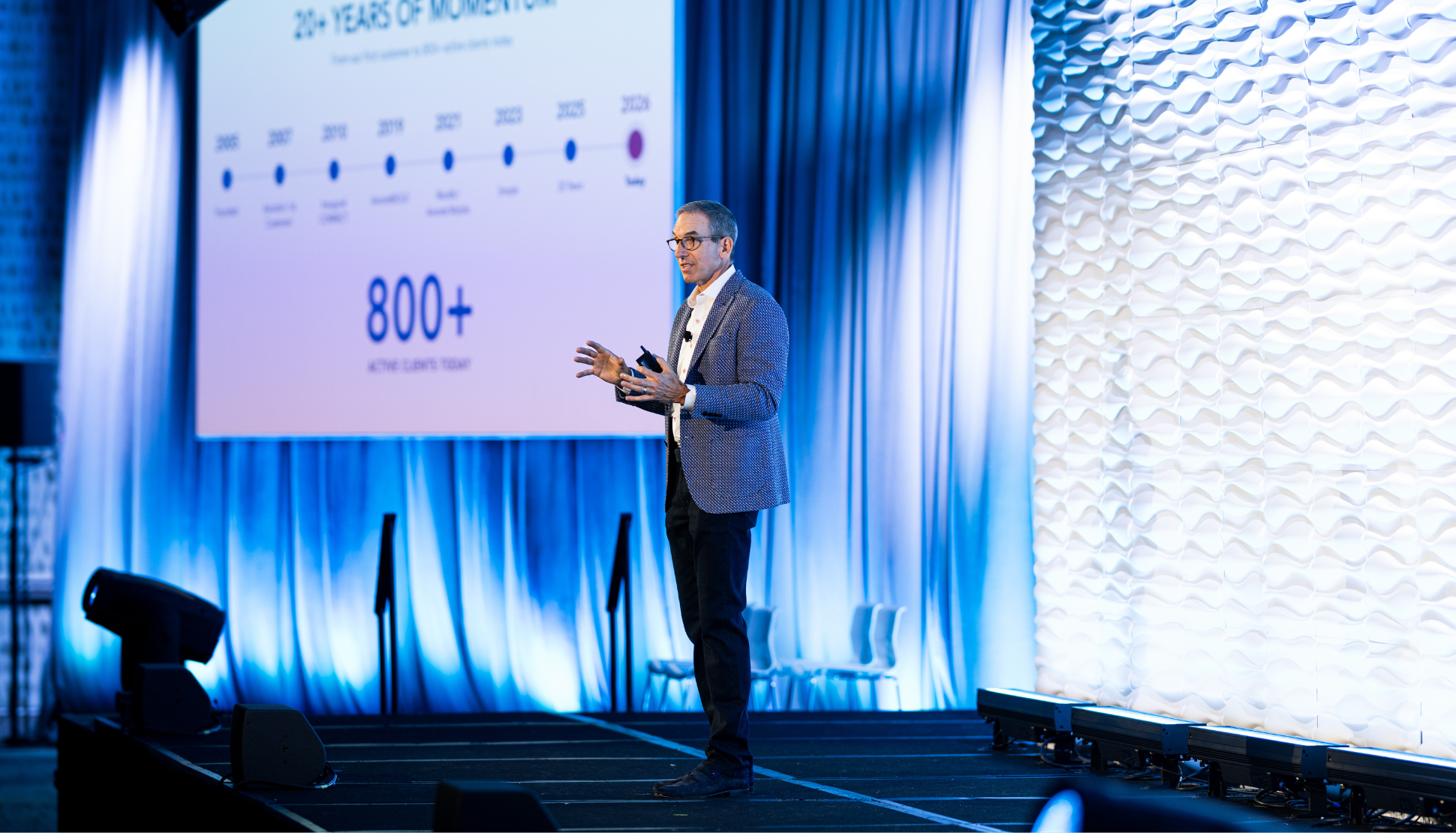
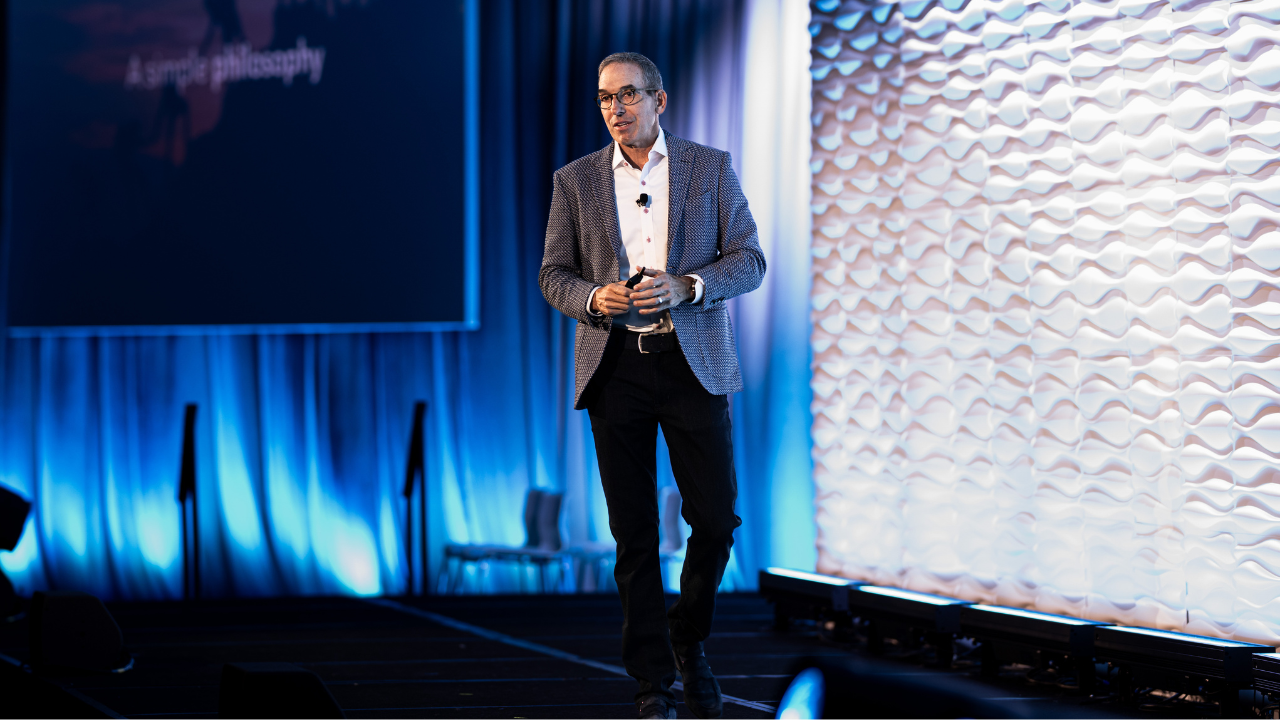
Dirk Izzo joined Avionté as CEO in June 2026, bringing two decades of experience leading technology-driven businesses at Fullsteam, NCR, Nielsen, and IBM. CONNECT 2026, Avionté’s annual user conference, marked his first major event as CEO and his first time taking the CONNECT stage, giving him the opportunity to meet and hear directly from the customers, partners, and employees who make up the Avionté community.
After CONNECT, Dirk sat down with Senior Content Strategist Suzanne Sitelman-Arroyo to reflect on his first two months in the staffing industry, what he’s learned from customers and partners, and where he sees the industry and Avionté heading next. They talked about the opportunities and challenges facing staffing firms, the role of AI in transforming the industry, and why he believes technology can automate the tactical work while relationships will continue to drive the strategic side of staffing.
Dirk also shared his vision for Avionté’s future and how he sees the company helping staffing firms move faster, work smarter, and compete more effectively in a changing market.
Stream Dirk Izzo’s keynote from CONNECT →
Suzanne Sitelman-Arroyo: Dirk, you’ve had an impressive career, spending the past two decades scaling technology businesses at Fullsteam, NCR, Nielsen, and IBM. What drew you to Avionté and the staffing industry specifically? You hadn’t worked in staffing before, so what was it about Avionté and the opportunity that made this feel like the right next step for you?
Dirk Izzo: I haven’t worked in staffing specifically, but I’ve spent my career in people-based businesses that use technology to make the experience better. The best parallel is probably hospitality and the restaurant business. Our job there was to provide point-of-sale and payments capabilities that made it easy for servers to take care of their customers, instead of worrying about placing orders, running back to the kitchen, or processing a credit card.
That’s what drew me in: staffing is a people business that leverages technology, and that’s exactly what hospitality was and what Fullsteam was, too. So, it was a pretty natural step for me to go from hospitality into this.
Suzanne Sitelman-Arroyo: Since this is your first time in the staffing industry, what do you see as the advantage of coming in as an outsider? What perspective do you think you can bring to the industry and its community?
Dirk Izzo: I have no baggage. I don’t have preconceived notions about how things should work, so I can look at it with a clean lens. I see a lot of parallels to hospitality, to the work I did at IBM, at Fullsteam, and at NCR around digitizing the entire supply chain.
Think about the pressure recruiting firms are under right now. There’s margin pressure on them, and there’s also pressure to deliver staffing and fill staffing needs often within a 48-hour window. So, think about it: If an employer sends you a note at 7 p.m., the likelihood is that your recruiter won’t see it until the next morning at 9 a.m. That’s a 14-hour delay. Out of the 48 hours, you’ve already eaten up 14 hours in wait time.
In a perfect world, that message comes in digitally. You have your AI agents take care of that right away. It’s about matching and checking the candidate’s availability. If they need to be interviewed, they can interview them with an AI bot. It checks their background, and it can do all that stuff behind the scenes.
So, when you come in the next morning, suddenly, you’re thinking, “I’ve got 15 candidates being considered for this role. Here are the two that I think have the best cultural fit.” I talk to them, I like them, and I submit them for the role. So, literally within 16 or 17 hours, you’ve gotten back to the person who sent you something at 7 p.m. that night.
That’s utopia. My point of view is that we should be able to digitize the supply chain and then automate it so there are no wait states throughout the process. And if we get there, we will make the entire industry more successful, but more importantly, we’ll deal with the margin compression that’s a reality for staffing agencies. Because there won’t be these wait states. There won’t be a lack of ability to provide and solve the employer’s request in a very quick period of time.
So that’s my desire for the industry: to speed up that entire process.
Suzanne Sitelman-Arroyo: So, you’re bringing a fresh perspective to Avionté and the industry. What lessons from your career and previous leadership roles do you think will be most valuable as you lead this company?
Dirk Izzo: Coming in, I’d say the first thing is that I bring a deep background in product. At the end of the day, companies like this are built on their product, and people buy in because it makes them more efficient and helps offset margin compression. So, my experience as a product leader is a big one.
Second is my philosophy that our customers are our most valuable asset. That’s central to the culture we’re building at Avionté, and honestly, it’s the culture this industry requires. And third, to deliver that kind of culture and experience, you need great people. So, my third focus is on our team: helping to lead and motivate people to take care of their customers.
Those three things — keep the product simple, focus relentlessly on the customer, and take great care of your people — are my equation for success, and I’ve had a lot of good fortune over the years leaning on exactly that.
Suzanne Sitelman-Arroyo: Speaking of those relationships, you’ve been at Avionté for a little over two months and have already spent a lot of time talking with customers, employees, and partners, including at CONNECT. What has stood out most from those conversations, and what have you taken away from them?
Dirk Izzo: In every conversation I have, customers and even prospects bring up what a great team we have and how much they love the Avionté people, which genuinely warms my heart. But they go further than that: they talk about the culture we’ve built and the products we deliver. At the core, though, it’s a great team of people leaning in to help drive their business forward.
Second, our customers love our strategy. They validated it at CONNECT. Every conversation, one-on-one or in a group, with prospects, customers, or consultants, has confirmed we’re on the right track. Now it’s really just a question of how quickly we can develop against that strategy.
The good news is we’ve adopted AI considerably across our own organization, and we’re seeing massive productivity improvements on the development side. So, I’m confident we’ll be able to deliver on that strategy faster than we ever could have historically.
Suzanne Sitelman-Arroyo: CONNECT wasn’t just your first event as CEO. It was also your first opportunity to speak directly to so many of our customers, partners, and employees in one place. What was your overall reaction to the experience, and was there anything that surprised you?
Dirk Izzo: I’ve been to a lot of customer conferences over the years, and our teams do an outstanding job pulling CONNECT together. The community we’ve built — customers, prospects, and partners — is unbelievable. It was the best conference like this that I’ve ever been to.
My reaction to the event dovetails with what I just said. People genuinely like our team and want to spend time with them and learn from them, which is great. But what I heard over and over again was: we want you to go faster. That’s part of why I’ve pushed so hard on AI adoption. It lets us deliver on those promises. I’m genuinely excited about what the rest of this year and next year will mean for the value we can create for our customers.
As for surprises, I was struck by how warm and receptive this industry was to someone from outside of it. I come in with no legacy baggage about staffing, but a lot of ideas and points of view, and it’s led to some really good conversations with a genuinely welcoming community.
Suzanne Sitelman-Arroyo: Was there a particular conversation, customer story, or moment from that week that really stuck with you?
Dirk Izzo: I talked to a lot of customers, prospects, partners, and consultants that week. Being available to customers matters a lot to me, so at CONNECT, I gave a prospect my cell phone number. I told them: it doesn’t matter what technology you buy, ours or a competitor’s; issues will come up, sometimes outside business hours, and you need someone you can call.
It reminded me of my time at NCR. Waffle House was a customer of ours, and one Christmas morning their AT&T wireless service went down. A cell tower had been damaged near Nashville, knocking out connectivity for all their upstate locations. Christmas morning happens to be Waffle House’s biggest day of the year, and suddenly they had restaurants full of staff who couldn’t take a single payment because everything ran over wireless.
Walt Ehmer, who was CEO at the time, called me and said, ‘This isn’t your problem. It’s AT&T’s, but nobody’s picking up the phone over there. Can you help?’ We got 17 people on the phone that Christmas morning, realized we had Verizon hotspots available, flew them out, and had those stores back up within hours.
I use that story because that’s what customer-centricity looks like. That resonates in staffing, too. It’s a people-based, inventory industry where showing up for customers, whether the issue is ours or someone else’s, is what it means to succeed.
Suzanne Sitelman-Arroyo: It’s great to hear you say that, because Avionté has built a strong reputation for customer care, from our account managers all the way through leadership. It sounds like you’re carrying that forward by making yourself personally available. How important is it to you that this culture of customer care starts at the very top and extends throughout the organization?
Dirk Izzo: It’s paramount to our success. I’ve done this for 30 years: if you place the customer first, you’ll always end up in the right spot. You win, and they win.
There’s a lot of emotion in this business, especially when something isn’t working right, whether it’s our issue or someone else’s. My message to the team is to take the emotion out of it, keep a high EQ, focus on taking care of the customer and resolving the issue, and good things will follow, both for them and for us.
That culture already existed here, and it’s going to continue. If anything, I want to pour some gasoline on it and make it even more central as we move forward.
Suzanne Sitelman-Arroyo: When speaking with our customers at CONNECT, what did you hear most consistently, and how is that shaping the way you’re thinking about Avionté’s priorities?
Dirk Izzo: The biggest theme was margin compression, and the multiplier on that is a shrinking labor pool. I talked about this in my keynote, too: we have an aging demographic leaving the workforce faster than the next generation is entering it, so the pool is naturally shrinking. On top of that, immigration challenges are shrinking it even further. So, a pool that used to be quite large is now smaller.
The challenge is that agencies need to place people quickly and at lower cost, right when the pool of available talent is shrinking, and it’s harder to find fish when there are fewer fish in the pond. This has made engaging the talent you already have so critical.
That’s why we’ve put so much emphasis on our mobile application: keeping talent engaged and fresh so you can redeploy them. It costs roughly $4,700 to source a new candidate and get them into your pool. If you can keep talent engaged and redeploy them instead, you do that at a much lower cost and a much better margin, which is a big return for the customer.
So, when it comes to margin compression, our response is threefold: help agencies engage the talent they already have, find new talent more efficiently, and digitize the supply chain and automate processes with AI, freeing recruiters to spend more time with employers and talent.
And the three things I mentioned in my keynote, engaging talent through mobile, using AI to automate the mundane so recruiters can focus on what matters, and digitizing the process to speed up time-to-fill, are critical to solving that, and they’re what we’ll continue to focus on.
Suzanne Sitelman-Arroyo: In your address, you outlined five trends reshaping the industry, some of which you mentioned above: uncertainty, the labor squeeze, changing talent expectations, AI, and the growing importance of skills. When you look at those trends alongside the pressures agencies are facing, where do you see the biggest opportunities for the industry over the next 12–18 months, and how can agencies capitalize on them?
Dirk Izzo: Specifically for clerical and light industrial, I think we’re in for a strong next 18 months. We’re also seeing significant opportunities in healthcare and nursing, and I think every segment has its own opportunity ahead. A lot will happen on the job-requirements front, and that’s great news for us as an industry because demand on the employer side hasn’t always been this strong.
That said, when you look at the pressures — margins, a smaller labor pool, the speed we need to respond and fill roles, and talent reliability challenges such as no-shows — those are the real dimensions behind the five trends. If we bring the right technology to bear, we can help our customers mitigate those risks and meet employer needs much faster.
Suzanne Sitelman-Arroyo: Of those five trends, is there one you think staffing agencies are underestimating or not paying enough attention to?
Dirk Izzo: It’s funny you ask. I’d say a year ago, staffing agencies were probably dismissive of AI, saying this is a people-based, relationship-based business, which it is. But AI isn’t going to replace those relationships. It’s going to augment the work you do as an individual, freeing up time so you can go deeper in those relationships. Once people wrap their heads around that and embrace it, I think it’s the trend that will have the biggest impact.
I want to be clear: this isn’t about AI replacing recruiters. It’s about AI taking on the mundane parts of the job, like the matching example I gave, where a request comes in at 7 p.m. and by the next morning, much of the groundwork is already done, so recruiters are just talking to the last few candidates and confirming cultural fit. That’s where we’ll win, by going deeper on relationships than we ever have as an industry.
Suzanne Sitelman-Arroyo: Were you surprised by how open agencies seemed to be toward AI and technology at CONNECT? Staffing has tended to be an industry that takes some convincing.
Dirk Izzo: Yes, there’s less convincing to do than one might think. But I do think people are still reluctant about how much they’ll let an agent do.
That’s why we built a strategy that isn’t all-or-nothing. You can choose where you actually want help and where you trust the bot to take on the work. We’ll also have an end-to-end capability where you can simply say, “I need 15 forklift drivers. Go find them for me.” And AI narrows the field to the best fits for you to talk to. Or you can pick specific steps — matching, screening, whatever you’re comfortable with.
But the speed of adoption has changed over the years. If you go back to the ’80s, ’90s and 2000s, the speed of adoption was very slow, whether it was a PCs or a smartphones. It’s gotten faster and faster over the years. I think AI is exponentially faster.
So, I think there’s still a lack of understanding of what AI can actually do for you. But as people start to realize what it can do, they start to embrace it.
I will say this: I was in a meeting recently where I asked how many people use AI today, and every hand went up. How many six months ago? Half the hands went down. A year ago? Down again. We’ve gone from near-zero adoption to almost universal adoption in a very short window. Everyone’s at a different stage of using it, but the speed of uptake has been remarkable.
Suzanne Sitelman-Arroyo: So, where do you think AI will make the most meaningful impact for agencies over the long run?
Dirk Izzo: Right now, there’s been a lot of focus on the front office, on matching candidates, interviewing them, and chatting with them, and that’ll continue, which is great. But I think the bigger wins will come from applying AI across the whole staffing platform, not just the front end.
For example, AI can also help with onboarding: kicking off the I-9, the background check, and the sequence of steps that get a candidate ready to show up for work.
And then I think the whole back-office piece, the payroll and the generation of invoices, can be helped by an agent as well.
The industry started by asking how AI helps recruiters on the front end, but I think AI will cut across the entire platform. When someone finishes an assignment, AI can keep the conversation going. A recruiter is still involved for the personal touch, but the system can surface three new roles that might fit or note that it’s their birthday or their spouse’s. Instead of a recruiter having to remember every detail, the system can carry that forward.
I see AI moving from the front office to the back office and into talent engagement, deployed across the entire platform. So, when somebody leaves a job, AI can pick up and continue communicating with them, keeping them engaged. Yes, you’re going to have a recruiter involved in that as well because you want the personal touch. But the agent could message that person and say, “Here are three new jobs we thought might be a good fit for you.” Or “Happy birthday. I noticed it was your birthday today.” Instead of relying on the recruiter to remember those details.
I think there’s a lot we can do to engage talent with AI. I think about it starting on the front end with front-office capabilities, but we’re thinking about it from a platform perspective. Front-office capabilities extend to the back office, which extends to employees and vendors, and to talent engagement across the board. It can be deployed across all of those areas.
Suzanne Sitelman-Arroyo: I like that example. It removes the usual worry that technology takes the human element out. In this case, AI can actually help build stronger relationships. So, let’s talk about the human side of the technology vision you’re building, and why relationships might matter even more as technology advances?
Dirk Izzo: I’d guess many staffing agencies have thousands of people in their talent pool who they don’t communicate with as often as they should, because recruiters are consumed by filling jobs, matching, and interviewing — tasks AI can help filter out. My hope is that the technology frees up recruiters’ time so that instead of touching 20% of their talent pool each month, they’re touching 40%. Over six months, you’ve reached everyone, and you can build deeper relationships and feed that directly into your CRM.
It’s the same on the employer side. Most employers work with multiple agencies. So, what differentiates us is the relationship: how quickly we fill roles, how we engage, and how well we understand their needs.
If we can free up recruiters’ time to understand not just today’s open roles but also where an employer’s needs are headed — a peak season coming up, a new location opening — we can get ahead of it. The people-based business will always be there. Taking the mundane work off recruiters’ plates gives them more time to go deeper with both talent and employers, and I think that creates opportunity on both sides.
Suzanne Sitelman-Arroyo: A lot of people also point to reporting and having good data as becoming increasingly important. So, talk to me a little bit about why that’s a focus for Avionté and why we think it’s so important for our clients.
Dirk Izzo: Historically, a lot of the companies we compete against have either a front office or a back office, but they don’t have a fully unified platform. I think the real power of the data comes from being able to connect the front office, back office, and talent data, and then use that information to answer questions like: How profitable has this talent been for us as a staffing agency? Have we been able to deploy them multiple times? And what kind of ratings have they received from employers?
Let’s talk about the employer. How quickly are we staffing these people for the employer? Are we beating the 48-hour SLA? If so, we should probably market that back to the employer and say, “We’re at 30 hours right now.”
So, I think there’s a lot of data we can pull out of the platform and present in a unique way that can really help them grow their business.
Suzanne Sitelman-Arroyo: There was also a lot of discussion at CONNECT about consultative selling and the growing employer expectation that agencies become strategic partners to their clients rather than vendors simply filling roles. How can the right technology help enable that shift?
Dirk Izzo: I look at it as strategic versus transactional. A lot of relationships in this business are transactional: I need five people; I fill five people. That’ll always exist. But if you don’t have time to sit with an employer and have deeper conversations, your relationship stays transactional.
The agencies that get ahead are the ones that eliminate the basic, mundane work and free up time for a real conversation: Where are you headed as a company? What’s your strategy? How can we help you get there? That’s the shift from a transactional conversation to a strategic one, where you can say, ‘If you’re opening another factory next year, let’s start building talent in that market now,’ instead of getting a call two weeks before they need 15 people.
That’s what we want our technology to do: free up time so agencies can have those strategic conversations and genuinely help their employers succeed.
Suzanne Sitelman-Arroyo: You’re still early in your tenure, but now that you’ve had a chance to listen to customers, meet the community, and experience your first CONNECT, has anything changed or sharpened your vision for Avionté, or did it mostly reinforce what you already believed?
Dirk Izzo: It definitely validated it. I’m genuinely excited. I think the team’s been on the right track. We needed to raise our development productivity so we could deliver faster, and every customer, prospect, partner, and consultant I talked to confirmed we’re on the right road: a digital supply chain and a core platform for the staffing industry that spans front office, back office, and talent engagement.
As we streamline that, it moves the relationship staffing agencies have with their clients from transactional to strategic, and I think the agencies that make that shift are the ones that win long-term.
Suzanne Sitelman-Arroyo: Picture yourself a year from now, back on stage at CONNECT. What do you hope you’ll be able to tell customers about how Avionté spent this year? What do you hope you and the team will have accomplished, and what do you want customers to say is different for their businesses because of it?
Dirk Izzo: First, I want to say our customers are happy. That they’re staying with us and asking us to help in more areas. If we do that, it delivers on my core mission of taking care of our customers.
Second, I want to deliver on the product strategy we committed to at this year’s CONNECT and show real, meaningful differences that let agencies spend more time on the strategic and less on the tactical.
And third: I played in the golf tournament this year, and my team did terribly, so next year, I want to win the golf tournament. Those are my three things.
Suzanne Sitelman-Arroyo: Those are big goals, especially the 3rd one.
Dirk Izzo: Exactly. I will not go down easily next year.
Suzanne Sitelman-Arroyo: Finally, after spending so much time with people who live and breathe staffing, what do you think technology will change about the industry, and what do you think it will never replace?
Dirk Izzo: It’s an extremely resilient industry, and one that’s always going to be around.
One thing I will say is that technology can replace the tactical work we talked about; it can’t replace the strategic. That’s where relationships come in, and that’s where people win.
The agencies that win on the strategic side will use technology to handle the tactical. But I don’t believe technology will ever replace the strategic relationships you build with talent and with employers that require human touch. That’s probably my biggest takeaway from all of this.
Next Steps
Stream Dirk’s CONNECT 2026 CEO keynote here.
Key Takeaways
- Embrace AI as an augmentation tool, not a replacement. AI won’t replace the strategic relationships at the heart of staffing — it removes the matching, screening, and scheduling work that consumes recruiter time, so your team can go deeper with the employers and talent who matter most.
- Think platform, not point solution. AI’s biggest impact in staffing won’t come from front-office automation alone — it extends to onboarding, payroll, invoicing, and ongoing talent engagement. Agencies on a unified platform gain the connected data to measure candidate profitability, track time-to-fill SLAs, and earn a seat at their clients’ strategic table.
- Shift from transactional vendor to strategic partner. Agencies that free up recruiter time through automation can move beyond filling today’s open roles to anticipating where a client’s business is headed — peak seasons, new locations, evolving skill needs. That’s the shift from vendor to advisor, and the agencies making it will be hardest to replace.