What happens when the gap between what software vendors promise and what they actually deliver finally starts to close? Everyone says they offer world-class service—but most agencies will tell you that’s not what they’re getting.
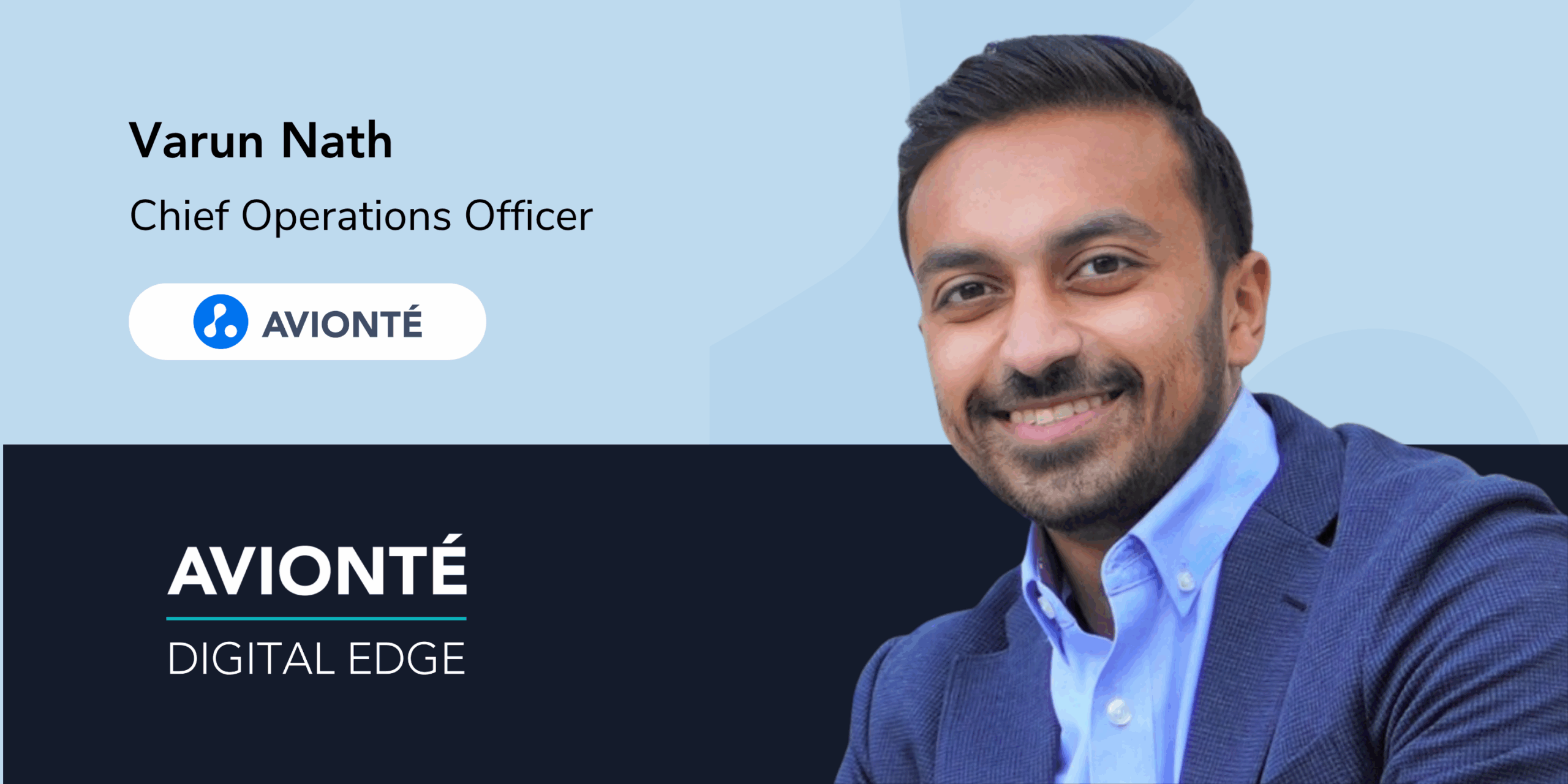
In this episode of Avionté: Digital Edge, host Chris Ryan sits down with Varun Nath, Chief Operating Officer at Avionté, to talk about how his team is rethinking the customer experience. It’s not about more features or faster transactions—it’s about building genuine partnerships that actually drive results. The rising NPS scores tell part of the story, but as you’ll hear, the real change runs much deeper.
Key Takeaways:
- Partnership is about shared success and real advocacy. Avionté restructured its organization so every customer has one dedicated contact who knows their business, cuts through internal red tape, and fights for what they need, not someone who just logs a ticket and moves on.
- Support isn’t just reactive anymore – it’s proactive. The new customer success team helps agencies anticipate challenges, build smart technical strategies, and make the most of key features before problems ever surface.
- At the core, every decision comes down to one question: what’s best for the customer? That mindset shapes priorities, incentives, and even how services are designed—focusing on real outcomes over internal shortcuts, even if it takes extra work behind the scenes.
This is a partial transcript of the full conversation. Listen to the podcast episode for the complete discussion.
Chris Ryan: So, Varun, let me start with a provocative question. Many staffing agencies view software vendors as utilities, kind of like electricity or water. They want you to keep the lights on; don’t break anything; send the monthly bill.
Partnership has always been a core value at Avionté. It’s in our DNA. And now that you are the one in charge of making that real in day-to-day operations, I’m curious about your opinion: Does partnership actually matter, or is this just marketing hype we tell ourselves?
Varun Nath: I would say that partnership absolutely matters. Great software is just great software, but without great service in the form of partnership, you can’t maximize the software that you’re using.
And I believe today, staffing firms need not just another vendor that’s going to ship software and send them an invoice. They need a partner who’s invested in their success and delivers outcomes. And software in this industry touches everything that’s business critical for a staffing agency: payroll, compliance, candidate experience.
So, if your vendor isn’t aligned with your goals and is more interested in just collecting an invoice from you, you’ll feel it in missed revenue, frustrated recruiters, and unhappy customers on your end. So again, just to summarize, I believe partnership is about making sure customers actually get the outcomes they expect. And it’s more crucial than ever in today’s world.
Chris Ryan: So, in a sense, we’re not just selling software. We’re really working with a customer, leveraging technology to deliver an outcome. I’m curious about that. A lot of staffing agencies say that vendors will talk of partnership but only deliver transactions.
So, what does an effective partnership actually look like in practice? It’s Monday morning, and the client’s freaking out. They have a challenge of some kind; everything’s on fire. What does partnership actually look like?
Varun Nath: Partnership means that your goals are aligned. At Avionté, we always say our success depends on our customers’ success. So that is the guiding philosophy of what partnership means to us.
Beyond that, it means understanding what our customers are trying to achieve. Most often, they’re trying to increase sales with the employers that they serve. They’re trying to deliver a great candidate experience and make sure that they get paid timely and with enough margin to run their business.
So, when there’s a fire on Monday morning, it’s not just a person at Avionté logging a ticket on a customer’s behalf and passing it on to the next person internally. It’s making sure that that person at Avionté is empowered to navigate Avionté’s organization internally, pull in resources as needed, and advocate on the customer’s behalf.
So, we’ve designed our processes around customers so they don’t get bounced around between our departments. A customer can call one person, one contact at Avionté, and you know that someone’s fighting for you inside of Avionté. That’s what partnership looks like. And it keeps the customer at the center of everything that we do.
Chris Ryan: Got it. So, let’s back up a little bit. You’ve come from business school, where they teach you frameworks, matrices, and theoretical models, and then you’ve worked in software for a while.
And I’m curious, when you compare the real world of software and staffing, where chaos reigns and customers don’t follow textbooks, what was your biggest: “Oh, crap. They didn’t teach me this in business school.”
Varun Nath: Certainly, business school teaches frameworks, like you mentioned. It helps try to structure the chaotic world of business. But the real world is messier. And I think for me, the biggest learning at Avionté was realizing how personal and urgent staffing is.
You have to make payroll every week, and you have to put talent to work every week. And so, you’re not just fixing software or servicing software, you are impacting someone’s paycheck, a candidate’s livelihood, and an employer’s operations. And so, there’s no chapter in the business school textbook that can teach you about the level of urgency and accountability that staffing specifically requires.
And I think when it comes to partnership, and how I translate that learning into action, is sometimes we have to do things that don’t seem efficient from a business standpoint, or don’t look good on a financial statement, but we do it because we know it’s the right thing for the customer, like adding additional resources when necessary.
Chris Ryan: So, I’m curious about this, and, in particular, your management philosophy. You’re running a service organization inside a software company, and in some ways that’s a little bit like being a social worker at a hedge fund. How do you make that work?
Varun Nath: I think my philosophy is simple – everything has to be structured around the customer’s success.
What is the customer trying to achieve with our software, and how do we deliver that most effectively? And, beyond that, we believe that service isn’t just a cost center at Avionté, it’s a growth driver for our own business. If we do our jobs right, customers expand with us, they renew with confidence, and they refer their peers.
So, I tell my team, our mission isn’t to close tickets. It’s to create trust. It’s to deliver customer success. That mindset makes us a true partner, not just another utility.
Chris Ryan: So, as you’ve gone through this process and you’re rebuilding the entire customer experience and thinking that through, what are the core principles that drive your decisions?
And, when your team comes up with competing priorities, how do you align direction?
Varun Nath: It’s actually very simple: we look at what’s best for the customer. Whenever there are competing priorities or a discussion that needs to be had, it’s what’s best for the customer. So, we’ve intentionally built, or rebuilt, I should say, Avionté’s internal organizations around customer outcomes rather than internal convenience.
So, when it comes to optimizing for internal staff convenience or internal staff efficiency, or a customer outcome, we always optimize for the customer outcome, even if it means more work behind the scenes for us.
Chris Ryan: So, Avionté’s NPS scores have jumped significantly, and I guess that’s a reflection of that focus on the customer.
But let’s be honest, a few years back, we had some customers who were less than thrilled, and I’m sure, as you know better than anyone, when it comes to customer satisfaction, the job is never finished. So, what specific changes did you implement that moved the needle that or that actually made a difference?
Varun Nath: Well, there’s a long list I could get into, but I think there are three major things that we did. And I’ll list them off, and then I’ll go into detail. One was that we standardized implementations and beefed up how much training we were offering new users.
Two, we implemented a customer success team, which is sort of the proactive twin of our customer support team. So, whereas customer support is typically reactive, where you submit an issue via a ticket and wait for a response, customer success is a group of people who work with all of our customers to help them see around corners proactively, implement technical strategies, and take advantage of best practice features.
And then thirdly, we totally revamped our customer support department so that again, it wasn’t optimized for internal convenience but optimized for fast response and resolution times.
And so, I can go into detail on each one of those just a little bit. One, standardizing implementations and increasing training allowed us to take a look at our implementation project plans and take on all the work that we thought was too complex or too time-consuming for a customer to do. So, we had to change our mindset around what does implementation actually mean.
So, we found ourselves, as an implementation team, taking on a lot of the behind-the-scenes work that we’ve typically asked a customer to do, like inputting data into the system and configuring the system.
So, that helped streamline the project plans a little bit, and it reduced the time a customer needed to take on a particular project. And then with that additional time a customer had, we said we’re going to offer more training resources. We’re going to staff a human trainer for almost all of our projects so that you can get some form of live interaction. We’re going to beef up our knowledge base, and we’re going to put in place in-application training.
Two, customer success: That is a brand-new team that we implemented just over a year ago at this point. And again, that team is supposed to be focused on proactive work with our customers to help them take advantage of all the new features and functionality we continue to release.
And then support. We basically refreshed that whole team, redid our triage and prioritization frameworks, and bifurcated the group so that they can specialize in different areas of the product and better serve our customers.
Chris Ryan: It sounds like it’s not just a big idea. There are a lot of small, important details that really make a difference to customers. And in this particular case, I want to drill down a little bit around implementation, because, in my experience, it seems to me that implementation was the most important predictor of success in anything related to human capital or staffing software.
And having a bad implementation could literally haunt a relationship for years. So, I’m curious about the implementation. It sounds like you were taking some work that we used to expect customers to do for implementation, and now we do it because we found we can actually do it better than they could. Is that right?
Varun Nath: Yeah. That’s one of the things, right, which is to do what’s hard for us, but easy for the customer.
So, we applied that philosophy to implementations as well, and we’ve taken a look at each task in all our project plans and really rationalized why we’re asking a customer to do something or why we’re doing a specific thing.
And then we’ve automated all the rest that can be automated. So, the collective impact of all of this is that customers are now getting a more standard professional implementation experience.
It’s quicker than any other vendor in the space, and it delivers consistent outcomes because you’re getting implemented on best practice features from day one. And we’ve trained our users to take advantage of those features from day one as well.
One thing we didn’t change, which I’m really proud of, is keeping implementations in-house. Other vendors in this space outsource a lot of their implementations, and it costs more and takes longer. We are very proud of the fact that we don’t have to do that at Avionté.
Chris Ryan: So, how long does it typically take to take a customer through an implementation at Avionté?
I’ve heard tell of staffing agencies, at some firms, where it might take a year or more when they’ve got a complex implementation and a third-party vendor. What does it typically take for Avionté?
Varun Nath: I think it depends on the customer size and the complexity of the implementation across several dimensions, a couple of those being: how many products are you implementing all at once, and how many data sources or legacy systems are you coming from? Typically, the most complicated part of an implementation is the data conversion.
So, if you’re coming from a third-party legacy ATS and payroll system, or you’re coming from three, that can impact how long a typical implementation will take. But I’ll say on average, for an average customer, coming from an average legacy system, it generally takes around three months.
Our most complex enterprise implementations still take less than a year, and that could be a 1000-user customer converting from 10 different data sources. We are still able to manage that in-house in under a year, or maybe it’s six to eight months, instead of the average three. But we’re talking about months, not years.
Chris Ryan: So, one other thing I’ve noticed with implementations – and this is something agencies don’t always think about- is when an agency acquires a new branch, maybe they merge with a competitor, the integration can be a real challenge.
And usually there’s a time crunch because M&A deals, by their nature, are kept confidential until the last minute. So, you have multiple systems, different processes, and data everywhere. How do we help customers navigate that chaos?
Varun Nath: Exactly as you said. When agencies merge or acquire someone else, time is short, and complexity is high. Our service teams have built playbooks around this very fact, and so we know exactly how to consolidate systems, migrate data, and align processes quickly so that the agency you have acquired can get online within weeks, essentially, if not days.
And we’ve done this so many times for all our customers who have aggressive, inorganic, or acquisition-heavy growth strategies. And this is really where experience matters. Our teams have a lot of experience doing this type of work.
And the key is doing it with speed without sacrificing compliance or data integrity. And that’s really where our team can hold a candle against other vendors.
Chris Ryan: So, having a high tenure implementation team is critical in M&A response.
Varun Nath: Correct. And just knowing how to handle all the complexities that come along with compliance and data conversion, data integrity issues, all that stuff, is sort of pre-built out. It’s a playbook that we rinse and repeat, depending on the customer.
Chris Ryan: Got it. So, let’s say you’re implementing a new customer, and the customer might have a strong point of view about what they want.
To what extent do you find yourself advising around new ideas, new workflows, maybe suggesting different approaches, or a third-party integration to customers? How proactive are you, and how does that change the game?
Varun Nath: Our entire implementation is based on best practice methodology.
So, what we do is we take what we believe are the best practices within our software suite, which are informed by the aggregate customer community base that we have. We put that into sort of the default system that you get, and we work backwards from our best practice workflows to identify which ones don’t work for your specific business or which ones need customization.
So, when it comes to being prescriptive, we’ve moved much more in that direction because the products, over time, have become so comprehensive and so vast that no one staffing agency can be an expert on every aspect of how they want their system configured. So, we work backwards from best practice to customize by exception, not by rule.
Chris Ryan: And that’s an interesting point because so many staffing agencies will start a discussion by saying: We do things differently here. We’re unique in some way. And, of course, we want to honor that. But there may be places where a staffing agency can learn from standard practice. So clearly there’s an opportunity.
There’s another myth I want to get at. And, I’ve heard this said by a few agencies at different points; some believe that once a software company gets too large, it can’t necessarily remain service-oriented.
And there’s this belief that only a small, boutique technology company can really provide you with customized service. My experience is that oftentimes the smaller vendors are resource-constrained, or they have questionable security infrastructure. They may not have the resources to respond at two in the morning. They might have one engineer on call.
How do you balance size and the importance of enterprise-grade security and reliability while still providing a very high degree of personalized service, which is what agencies want?
Varun Nath: I agree with the general sentiment that smaller vendors can feel more personal, but they often can’t scale or support customers in critical moments. And larger vendors have scale, but then customers can feel like a number, and they don’t really get that bespoke white-glove service.
I think we built Avionté to bridge that gap. We have enterprise-grade security, reliability, resources, and products, but we paired it with a service model where every customer gets named dedicated resources, and we have an internal staffing model that allows us to flex up and down depending on how complex a project is getting, or what the timeline is, or really what the customer needs to be successful to run payroll that first week.
So, if I need to pull in an extra two people on your project because it’s coming down to the wire and we need an extra pair of hands on keyboard, I have the internal staffing flexibility to do that because, at Avionté, we have the scale and the resources to do that. But it’s not going to be a brand-new resource rolling onto your team while the other one’s out of the office or doing something else.
It’s going to be your project manager who’s been with you for the whole project for the last five or six months, paired with maybe your trainer who’s going to help out in the last bit of the project, but also has the context of your specific needs and organization – paired with your dedicated customer support agent and your dedicated customer success manager, and your dedicated account manager. We have all these things ready to go, and we can pull them in as needed throughout the project.
Chris Ryan: So, it’s really combining the advantages of both large and small. You want to create a relationship of a smaller organization and have those well-known, reliable contacts that the customer counts on every day, but you can bring all the resources you need to the party, whenever it’s appropriate. That makes a lot of sense.
So, one thing I’ve always wondered about customer service is that you get the 1% of customers who are going to be the most frustrated. They may have a demanding timeline; they may have a mess that needs to be cleaned up.
As you were working through your role in operations, when did you realize you were actually making a difference? Was there a specific moment, a watershed customer interaction, where it all clicked?
Varun Nath: I don’t think there was any one specific moment, because these changes are so complicated that we had to make over the past few years, and it takes a while for them to bear out as well and see the impact.
But a lagging indicator of success for me is a funny one. I just stopped receiving angry emails in my inbox. And now I almost never deal with an angry escalation, starting with me first as COO at Avionté.
To me, that represented that we’ve implemented multiple layers of accountability within the organization that all own customer success. It doesn’t just start with leadership; it starts with the frontline project manager or customer support, or customer success manager at Avionté, and they’re able to mitigate a lot of the risk or customer unhappiness or just meet tough customer requirements before these things bubble up to me.
So for me, that’s been an interesting lagging indicator where my inbox is just a lot cleaner than it used to be.
Chris Ryan: So, your team is heading off challenges before they reach your door, which means that things are working right. That’s kind of neat.
Now, let’s talk about team morale. Great service requires genuine enthusiasm and a positive attitude, but you have service team members who are under a lot of pressure. They’re dealing with the toughest challenges. So, how do you keep your team motivated and energized when they’re essentially professional problem solvers dealing with problems all day long?
Varun Nath: I think it’s a multi-pronged approach, but I’ll start by saying you have to hire people who enjoy solving problems. So, it comes down to just hiring the right people for the right roles. But, beyond that, we keep people motivated by a mix of intelligent incentive design and recognition.
So, intelligent incentive design means incentivizing our staff based on customer outcomes, not Avionté outcomes. So, we reward customer success managers, customer support agents, and project managers based on how quickly they’re able to deliver value for a customer.
And then beyond that recognition, if someone has a customer win, or they were able to drive adoption of a specific feature, or really turn things around with a specific customer, we celebrate those things internally very loudly. We make sure that those stories are what people keep in their minds in meetings and in emails and other things.
And so, I think with those three prongs, you get a team that’s excited about coming to work every day and delivering customer success.
Chris Ryan: So, as you were managing your team, were there any points where the service team was opposed to your recommendations and changes, or they didn’t want to follow through with your thought process? How did you overcome it?
Varun Nath: Change is always hard. It always brings resistance, and so many people in the organization have different perspectives on what direction we need to row in or what problems we need to fix. I think what helped me overcome that was unifying all these different teams within customer operations around a single idea, which is hard to argue with: what’s best for the customer.
No one can argue against that. And if you analyze every idea or priority against what’s best for the customer, you’re automatically going to make the right decisions, and I don’t even need to be in the room anymore to make sure that’s happening.
And that’s just culture. At the end of the day, if it happens without me being in the room or without leadership being in the room, then it’s our culture. That’s how I think we overcame a lot of the latent resistance that comes along with change.
Chris Ryan: So, looking ahead, a lot of people in staffing didn’t sign up to be software experts. They got into the business because they like to connect people with opportunities.
But now we’re at an inflection point in the industry where there are a lot of developments going on: artificial intelligence, automation, and new platforms. And one of the things that I’m wondering about is what does service and support need to look like to help these non-technical professionals thrive as the world changes? Because things are happening at a very fast pace.
Varun Nath: I think it needs to be just in time. So, what that means is we need to get new user training into the hands of a new user as soon as they access the system. They shouldn’t have to sit in a separate training class.
If we’ve implemented a new feature in the system, we need to send out notifications and communication about that feature just at the right time for users to take advantage of that. If a customer is struggling or is unhappy with something, we need to be able to respond just in time – not two months too late, or two months too early, because they might not have the time to talk to their software vendor while they’re focused on growing their business.
So, I think that’s going to be the primary application of how we leverage AI within customer operations. Internally, at Avionté, we wanted to help predict and signal when a customer needs specific help and what type of help that might be.
So, I think, ultimately, AI is not going to be about replacing our internal staff and making customer support a chatbot. It’s going to be about making our staff more effective with the time that they have, because AI is going to be signaling to them what’s needed when for a particular customer.
Chris Ryan: And as we go through this accelerated pace of change, do you have a fear that some of our customers are going to get left behind, that the challenge of adopting new technology is going to be too great for them? How do you see Avionté overcoming this challenge, helping agencies to navigate technology?
Varun Nath: I do have a fear of that. I think that’s true of any technological transition in any industry. There are always technology laggards and technology leaders, and typically, the technology leaders outperform the rest of the industry. So, ideally, that’s where we’d like to see all of our customer base be.
However, that’s not always the reality. And so I think one way we can help is by developing intuitive products that scale up and down in complexity based on what the customer needs at any given point. So, maybe we deliver a fully comprehensive ATS, but not every customer needs to take advantage of every bell and whistle in that platform to realize ROI.
I think the same thing about our service model. We need to have a flexible service model so that we’re able to support our customers and meet them exactly where they are. We can’t talk past our customers about complex features and playbooks if the customer is just not there. So, we need to have different flavors of how we implement the product and how we service that product so that we can match exactly where the customer’s at, whether they’re a laggard or a leader.
And I think you can only really do that if you have humans that care about their customers, servicing those accounts and those customers every single day. And that’s really what we do best at Avionté.
Chris Ryan: It’s interesting, Varun, and I really appreciate your candor around this.
When we talk about the challenge of customer service, it sounds like the most fundamental principle is to design customer service to service customers. It goes right back to the basics, what’s best for the customer.
So, I really appreciate real talk about what it takes to serve customers in this industry, because so often I hear people talk about it, and they’ll throw out ideas or metrics, but at the end of the day, you have to have a customer service mindset, and you have to be able to understand exactly where your customers are.
What I will say now to listeners, if you want to learn more about how we’re approaching customer success differently, reach out to your account manager or visit avionte.com.
This is Chris Ryan for Avionté: Digital Edge. Until next time, stop accepting vendor mediocrity, demand partnership.
Guest
Varun Nath
Chief Operations Officer at Avionté
Varun has a background in leading B2B enterprise software customer success, solutions engineering, sales, product management, and implementation teams. Before Avionté, Varun worked for Epic (enterprise healthcare software) in Madison, WI. During his tenure at Epic, Varun relocated to Dubai where he was General Manager for their Middle East office. Varun left Epic to pursue his MBA at Harvard Business School. While in business school, Varun worked at Amazon Web Services and advised several startups on product management and growth strategy.
Host
Christopher Ryan
Chief Strategy & Marketing Officer at Avionté
Christopher Ryan leads the Strategy and Marketing functions for Avionté. He brings more than three decades of consulting, thought leadership, and corporate experience in Human Capital Management.
About Avionté Digital Edge
Modern technology has revolutionized the way we live, work, and play. It’s also what’s fueling the gig economy which has dramatically changed employment practices. So, what does that mean for staffing and contingent work? In our Avionté Digital Edge podcast series, we will speak directly with industry experts to explore topics and trends related to the digital transformation of staffing and temporary employment in the US workforce.
Subscribe to Avionté Digital Edge on These Platforms