At a Glance
Staffing agencies can adopt AI responsibly by applying six checks (transparent, fair, explainable, defensible, accountable, human in the loop) and following a five-step path: identify, evaluate, protect, monitor, and scale. With 61% of agencies already using AI, the goal is governance you can explain and defend to regulators, clients, and candidates.
This year, 61% of staffing agencies are using AI, and 39% rank it as their top technology priority. According to the StaffingHub 2026 State of Staffing Benchmarking Report, agencies adopting AI are growing at more than twice the rate of those that aren’t.
But choosing not to adopt AI doesn’t mean it won’t find its way into your business. Your employees already use it, your vendors embed it in their products, and your clients will increasingly expect the efficiencies it delivers.
The difference is whether adoption happens with a clear strategy and appropriate oversight or develops informally, with little governance. Without that foundation, agencies risk making decisions they can’t explain or defend, exposing themselves to compliance issues, damaging candidate and client trust, and creating operational problems. The goal is to put AI to work in ways you understand, can explain, and can stand behind, including the data it uses and how its results are evaluated.
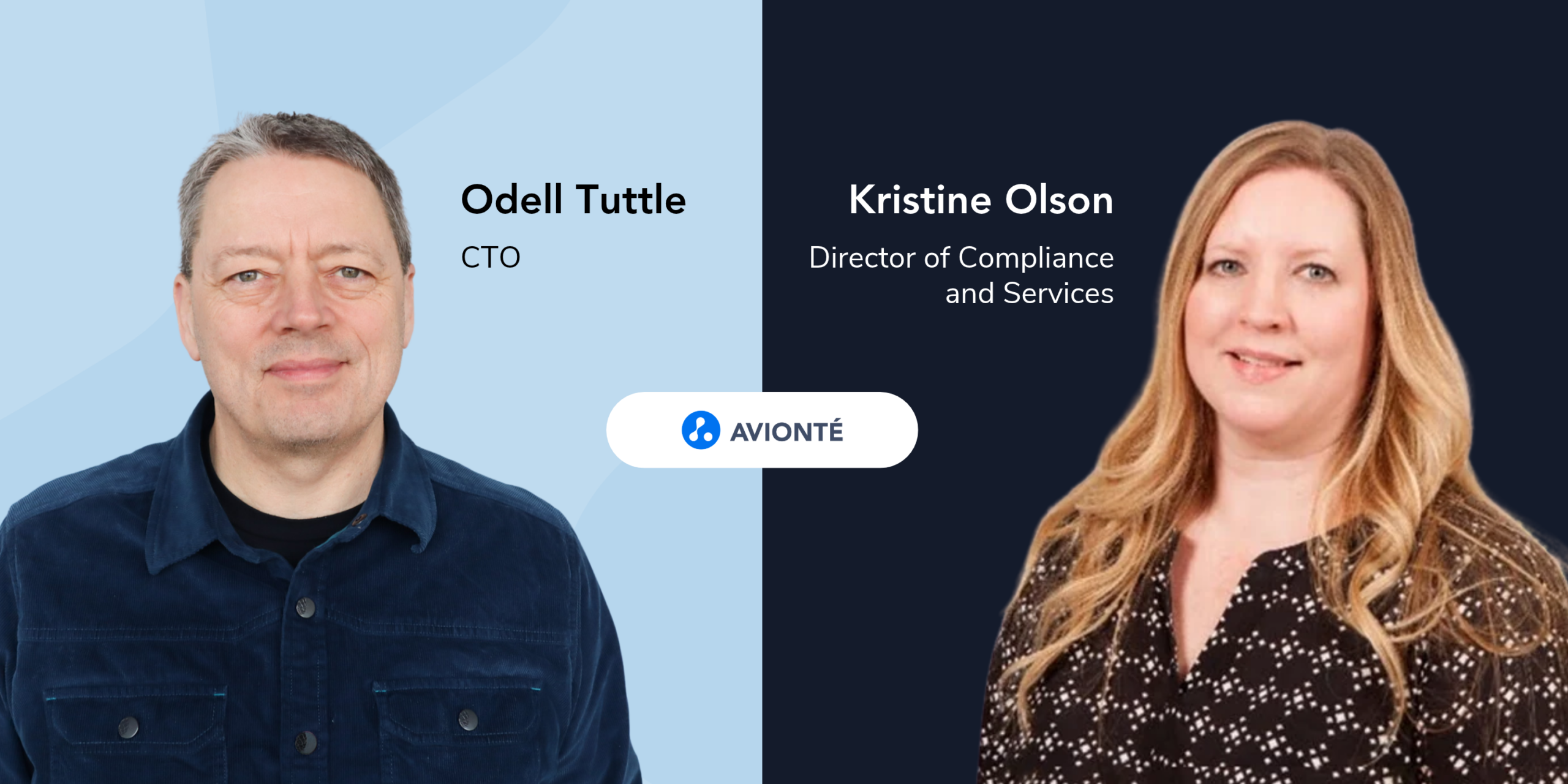
As a special encore of their well-received Staffing World 2026 breakout session, Avionté’s Odell Tuttle, Chief Technology Officer, and Kristine Olson, Director of Compliance Services, revisit their practical guidance in AI You Can Defend: Adopting AI without Risk, available on demand. During their conversation, they explore how staffing firms can adopt AI responsibly while protecting their data, people, and the trust of candidates and clients, without slowing innovation.
That balance matters most in staffing, where the consequences of misusing AI extend beyond legal exposure and financial penalties. Without appropriate safeguards, AI can also raise ethical concerns, introduce operational risks, and damage an agency’s reputation. As Odell explains, “In staffing, you’re not just applying AI to data. You’re applying it to relationships, and relationships sit at the core of staffing.”
Six Checks for Responsible AI
Most staffing leaders understand the importance of responsible AI. The harder question is what responsible AI looks like when AI starts influencing decisions about people. Consider a candidate who applies for a job that’s a great fit but never hears back. An AI tool may have played a role in that outcome, without the candidate ever knowing. When people can’t understand or question those decisions, trust can quickly erode.
Kristine outlines six checks staffing organizations should apply to their AI tools and the decisions they influence:
- Transparent: Are candidates told when AI is part of the process and how it’s being used?
- Fair: Does the tool treat people fairly, without penalizing factors such as an employment gap or an age-coded resume? Bias audits look for disparate impact, meaning patterns of unequal outcomes across age, race, sex, or disability, regardless of intent.
- Explainable: If a client asks why a candidate wasn’t put forward, can you provide a specific, understandable reason?
- Defensible: Can you produce a documentation trail showing how a decision was made?
- Accountable: Is a person responsible for the decision, rather than the vendor or the algorithm?
- Human in the loop: Can someone review, adjust, or override an outcome when something doesn’t look right?
Putting these principles into practice requires more than knowing what a tool produces. Agencies also need to understand how it gets there, especially when licensing AI from an ATS or sourcing vendor rather than building it in-house.
Does the tool rank candidates for a recruiter to review, or screen them out before anyone sees their applications? Those distinctions matter, and settings configured during implementation can go unexamined long after a tool is in use.
What “Defensible” Actually Means
Having responsible AI practices in place is one thing. Being able to demonstrate that they’re working when a regulator asks is another. Kristine outlined five areas regulators are likely to examine:
- Documentation trails: Can you reconstruct how a decision was reached, including what the AI recommended, who reviewed it, and what changed?
- Human-in-the-loop checks: Is there meaningful oversight, or are employees simply approving what the AI recommends?
- Model and bias testing: Are models regularly tested for bias and unintended outcomes as tools, data, and use cases evolve?
- Audit readiness: Do you have an internal AI governance policy covering your tools, monitoring practices, oversight requirements, and employee training?
- Clear accountability: Is it documented who approves AI tools, configures them, monitors their use, and takes responsibility when something goes wrong?
That last point is especially important for staffing agencies. As both the employer and the organization deploying AI hiring tools, agencies bear significant responsibility for how the technology is used. Vendors may build the tools, but agencies can’t hand off their responsibility to vendors. The obligation to govern AI use, monitor outcomes, maintain documentation, and defend the decisions it influences rests with the organization using the technology.
Navigating the Patchwork of AI Hiring Laws
Responsible AI adoption also means staying current with the laws governing how these tools can be used. Illinois, Colorado, Connecticut, California, and New York City are among the jurisdictions furthest along in enacting AI hiring laws, but their requirements vary. Some laws apply based on a candidate’s residence, not the staffing agency’s headquarters or operations. For agencies recruiting across state lines, that creates a complex compliance picture.
Kristine recommends building processes around the combined requirements of all laws that apply to the business, then using that higher standard as the default across all locations. This gives recruiters and operations teams consistent practices to follow, rather than requiring them to determine in real time which rules apply to each candidate. It can also help reduce compliance exposure and administrative complexity.
A Five-Step Path to Responsible AI Adoption
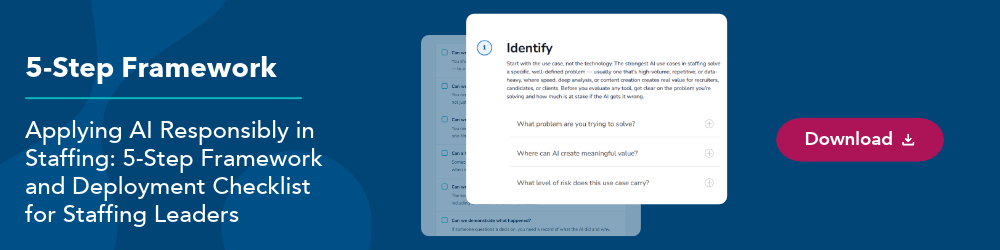
So where should agencies begin? Odell offered a five-step framework for evaluating and adopting AI. The process is straightforward, but it requires ongoing attention as tools, workflows, and regulations evolve.
- Identify: Where could AI create meaningful value? Start with the business problem you’re trying to solve and the level of risk associated with the use case.
- Evaluate: Understand how the model was developed and tested. What data does it use? Has it been evaluated for bias? Can the provider explain its recommendations or results?
- Protect: Establish safeguards before deployment. Determine where human oversight is needed and how you’ll address privacy, data security, and transparency.
- Monitor: Continue testing for bias and unintended outcomes, reviewing AI-influenced decisions, and tracking changes in applicable regulations.
- Scale: Begin with a controlled pilot, evaluate the results, and expand to other workflows when there’s a clear case for doing so. Keep monitoring as adoption grows.
This framework gives agencies a practical way to move forward without treating AI adoption as an all-or-nothing decision. Start with a defined use case, implement safeguards, learn from real-world results, and build from there.
Your Responsible AI Checklist
Putting these principles into practice starts with asking the right questions about the AI tools your organization uses, the data they rely on, and the decisions they influence.
Along with the webinar recording, we’ve also made our free guide, Applying AI Responsibly in Staffing, available to help staffing leaders apply these principles. The guide expands on the five-step adoption framework and includes a practical deployment checklist to help agencies evaluate AI tools, establish safeguards, and answer critical questions: Can we explain the results? Do we understand what data the tool uses? Can a person review or intervene when necessary? Together, the recording and guide offer practical direction for adopting AI with greater confidence and control.
Stream the Recording On Demand →
Key Takeaways
- Put the six responsible-AI checks to work on every tool that influences hiring decisions. Make sure each tool is transparent, fair, explainable, defensible, accountable, and keeps a human in the loop. Candidates and clients should be able to understand and question the outcome.
- Build a documentation trail before a regulator asks for one. Record what the AI recommended, who reviewed it, and what changed. Pair that with regular bias testing and a written internal AI governance policy.
- Own the accountability, even when a vendor built the tool. Agencies are both the employer and the organization deploying AI hiring tools, so the duty to monitor outcomes and defend decisions can’t be handed to a vendor. Document who approves, configures, and monitors each tool.
- Design your process around the strictest AI hiring laws that apply to you. Illinois, Colorado, Connecticut, California, and New York City have different rules, and some apply based on the candidate’s residence. Using the combined higher standard as your default saves recruiters from deciding rule by rule.
- Start with a controlled pilot, then scale on evidence. Use the five-step framework (identify, evaluate, protect, monitor, scale) to begin with one defined use case. Expand only when results justify it, and keep monitoring as adoption grows.