You post the job. Forty people applied in the first hour. By the time a recruiter opens the queue the next morning, half of those candidates have already accepted offers elsewhere.
That’s not because they weren’t interested. It’s because someone else got to them first.
In today’s staffing market, success isn’t just about reaching candidates faster. It’s about pairing speed with the kind of engagement that keeps talent connected at every stage. Candidates apply to multiple jobs at once, often from their phones and outside traditional business hours, and they expect timely communication, easy access to information, and a process that fits the way they work.
Meeting those expectations requires more than great recruiters. It requires technology that can engage candidates the moment they apply and keep those conversations moving. That’s where the right applicant tracking system (ATS) becomes a competitive advantage.
The challenge isn’t that recruiters aren’t working hard enough. It’s that they’re trying to keep up with a hiring pace that manual processes simply weren’t built to handle. Managing dozens of open requisitions while responding to every new applicant in real time isn’t realistic, no matter how experienced your team is.
When those expectations aren’t met, candidates quickly disengage and move on. For agencies filling high-volume, high-turnover roles, the ability to keep candidates engaged throughout the talent lifecycle has become a key differentiator.
Whether you’re evaluating a new staffing ATS or looking to get more from the one you already have, here are six ways your staffing ATS should keep candidates engaged from application through placement and beyond.
-
Simplifies Digital Onboarding Before Candidates Lose Momentum
Nothing slows candidate momentum faster than a complicated onboarding process.
A candidate who enthusiastically accepts an offer on Monday can lose interest by Wednesday if starting the job requires printing paperwork, tracking down documents, re-entering the same information multiple times, or navigating disconnected systems.
Onboarding is a critical moment in the candidate journey because it’s where the experience promised during recruiting becomes reality. A smooth process builds confidence, while a frustrating one can make candidates question their decision before they even start work.
The right staffing ATS should make onboarding simple, digital, compliant, and accessible from anywhere. Candidates should be able to complete required forms, provide necessary information, and move through the process without unnecessary delays, while staffing teams maintain accurate records and meet compliance requirements.
Automated digital onboarding with e-signature, document collection, and compliance verification helps agencies speed time-to-fill while keeping records audit-ready. This is especially important in high-volume staffing environments, where every delay creates an opportunity for candidates to move on or accept another offer.
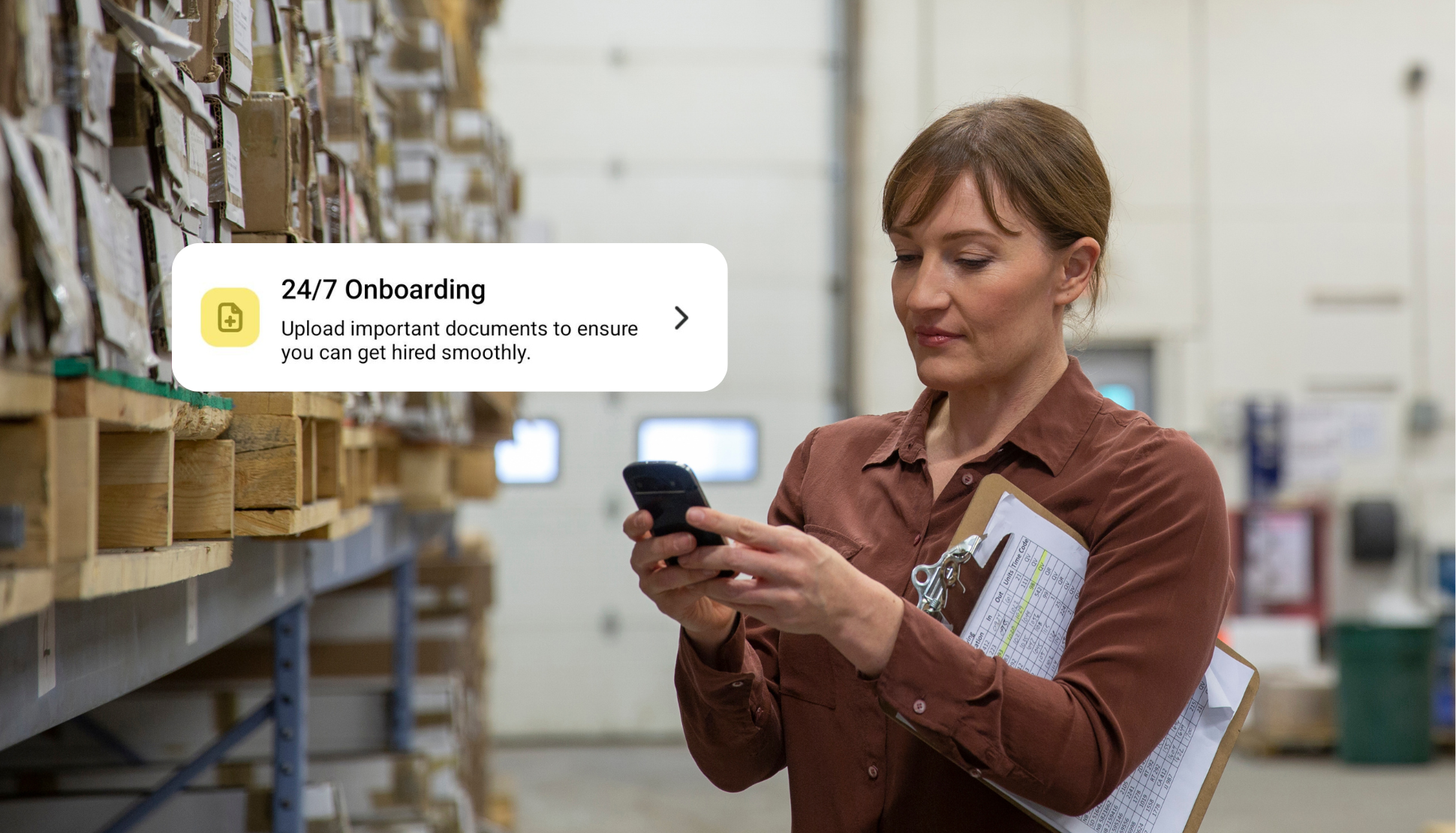
With digital onboarding built into AviontéBOLD, staffing teams can reduce manual or repetitive tasks, eliminate unnecessary handoffs, improve accuracy, and keep candidates moving through the hiring process. And through Avionté 24/7, Avionté’s mobile staffing app for talent, candidates can complete required onboarding information directly from their phones, creating a faster, more convenient experience wherever they are.
By integrating recruiting, onboarding, compliance workflows, and a mobile candidate experience, agencies can create a smoother transition from “interested candidate” to “successful placement.”
-
Turns Candidate Relationships into Redeployment Opportunities
The value of a candidate relationship doesn’t end when an assignment does.
For staffing agencies, especially those managing large talent pools, each successful placement creates an opportunity for future business. A candidate who has completed an assignment is already a known resource, with a work history, skills, performance record, and a relationship with your agency.
The challenge is staying connected and knowing when the timing is right for the next opportunity.
Many agencies still rely on recruiters to manually track which candidates are available, who performed well, and who may be a strong fit for another open role. That approach can work on a small scale, but it becomes increasingly difficult as talent pools grow.
The right staffing ATS should help agencies turn candidate data into action by making it easier to identify qualified talent, understand candidate history, and reconnect with candidates when relevant opportunities arise. Instead of starting the sourcing process from scratch, recruiters can put existing relationships to work, reducing their reliance on expensive job boards and the need to compete for the same talent every other agency is recruiting.
This is where candidate engagement and redeployment converge. A strong candidate experience keeps talent connected to your agency, while the right technology helps recruiters convert those relationships into faster fills and stronger retention.
By using automation to analyze candidate information, surface relevant opportunities, and streamline recruiter workflows, AviontéBOLD helps agencies match qualified candidates with the right opportunities faster while taking a more proactive approach to redeployment. Future AI-powered matching capabilities will further enhance this process by helping recruiters quickly identify the best-fit talent based on skills, experience, and opportunity requirements.
-
Creates a Mobile-First Candidate Experience
Candidates expect the same convenience in their job search that they experience in other parts of their digital lives. They want to find opportunities, complete tasks, access information, and receive updates wherever they are.
A modern ATS should extend beyond recruiter workflows by supporting a candidate-facing mobile experience that keeps talent connected throughout their relationship with an agency. Whether candidates are searching for jobs, reviewing opportunities, checking schedules, accessing important information, or receiving updates, mobile access reduces friction and keeps engagement going between assignments.
This type of self-service experience benefits both candidates and recruiters. Candidates get faster access to the information they need without waiting for a response, while recruiters spend less time handling routine requests and more time focused on relationship-building and placement activities.
When an ATS integrates with a candidate-facing mobile experience, agencies create more opportunities to stay connected with talent and keep their agency top of mind when the next opportunity becomes available.
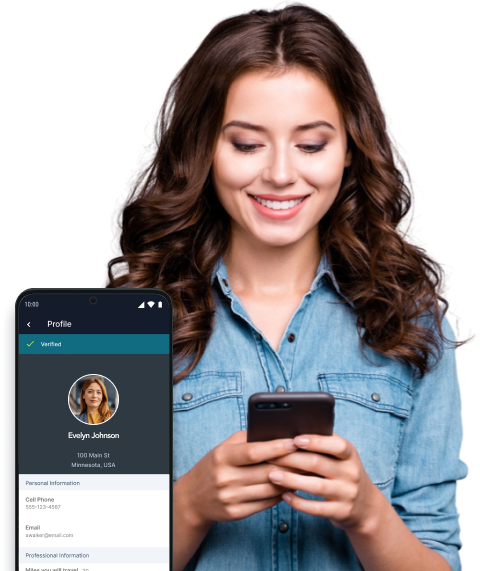
Avionté 24/7provides a convenient way for talent to access jobs, schedules, pay information, important updates, and new opportunities between assignments — all from wherever they are. This ongoing connection also helps agencies strengthen candidate relationships, improve redeployment, and quickly reconnect proven talent with new opportunities.
-
Centralizes Candidate Communication Across Every Interaction
Candidates rarely wait for email responses, and phone tag slows the hiring process for everyone. Text messaging has become one of the most effective ways to communicate quickly about interviews, job opportunities, shift confirmations, document requests, and next steps.
The challenge for staffing agencies is managing those conversations at scale.
Sending texts one by one from personal phones may work for a small number of interactions, but it quickly becomes difficult to manage across multiple recruiters, branches, and open requisitions. It also creates a visibility problem. When conversations happen outside the ATS, important details can get lost, leaving the next recruiter without the context they need to continue the relationship.
A modern ATS should support two-way communication that keeps every interaction tied to the candidate record. With tools like Avionté Chat, recruiters can manage candidate conversations in a centralized experience, giving teams visibility into communication history and ensuring candidates receive a more connected experience.
That continuity matters. In a busy staffing environment, the recruiter who initially contacts a candidate is not always the person who completes the placement. When candidates have to repeat information that they’ve already shared, the experience feels disconnected.
By keeping communication tied to the candidate record, staffing teams can create more consistent interactions while building stronger relationships at every stage of the talent journey.
-
Uses Candidate Engagement Data to Identify Problems Before They Impact Placements
The most overlooked way to improve candidate engagement is to understand when candidates are beginning to disengage.
A candidate who stops responding to messages, fails to confirm a shift, or delays completing onboarding steps may be showing early warning signs of dropping off. Without visibility into those signals, agencies often discover the problem only after a missed interview, a no-show, or a lost placement.
An ATS should help agencies turn candidate engagement into measurable insights. Metrics such as response rates, time-to-first-contact, application completion rates, and shift confirmation rates give staffing leaders visibility into what is working and where improvements are needed.
These insights also create valuable coaching opportunities. A recruiter may have strong fill rates but higher early attrition because candidates accept placements but do not stay engaged through onboarding or their first assignment. Without the data, that challenge may feel like a staffing problem. With the data, leaders can identify patterns and take action.
Candidate engagement should not be managed by agencies based on instinct alone. It should be something they can measure, improve, and optimize over time.
This is where connected technology becomes a competitive advantage. Reporting is only as valuable as the data behind it. When recruiting, payroll, onboarding, communication, and operational data reside in disconnected systems, leaders are often left piecing together information from multiple sources before they can make a decision.
Avionté’s reporting capabilities are powered by an end-to-end platform and integrated ecosystem that consolidates critical staffing data in one place. With a unified view across the front office, back office, and connected solutions, agencies can access more comprehensive insights, identify trends faster, and make decisions based on a single source of truth.
By integrating engagement data into everyday recruiting workflows, agencies can shift from reacting to candidate drop-off to proactively improving the candidate experience — faster and with greater confidence.
Candidate engagement can no longer rely on recruiters remembering one more follow-up, sending one more message, or manually handling one more task. In a market where candidates have more choices and less patience, agencies need technology that helps them move faster and create a more connected experience.
The right staffing software ATS doesn’t just store candidate information or manage job orders. It connects communication, automation, mobile access, onboarding, analytics, and the workflows recruiters rely on daily, helping agencies build stronger relationships from application through redeployment.
The agencies that win the future of staffing won’t just be the ones that find candidates first. They’ll be the ones that use technology to keep candidates engaged, deliver better experiences, and convert strong talent relationships into long-term business value.