At a Glance
Most staffing agencies treat their candidate databases as archives rather than pipelines. Yet the data is clear: growing agencies have moved beyond reliance on job boards and are building sourcing engines around owned channels, starting with talent already in their databases. This post explains why your ATS is your most underused asset and what it takes to activate it.
You’re paying for job board subscriptions. You’re attracting the same candidates that your three closest competitors are also reaching out to. And somewhere in your ATS, probably buried under 90 days of inactivity filters, there are thousands of workers who’ve already worked with your agency, passed your screening, and trust you enough to have said yes once before.
That’s not a sourcing problem. It’s a database activation problem.
The 2026 State of Staffing Benchmarking Report from Staffing Hub makes the distinction clear: 50% of growth agencies rely entirely on owned channels — internal databases, referrals, direct sourcing, and social media — with no reliance on job boards. Among flat- or slow-growth agencies, 73% still list job boards as one of their top three sources. Only 8% of growth agencies say job boards are their highest converting source, compared with 36% of slow-growth firms.
The agencies pulling ahead aren’t just finding better candidates. They’re building better systems to stay connected to the ones they already have.
Why Staffing Agencies Fail to Re-Engage Their Best Candidates
The average staffing agency has years of candidate data in its ATS. Former placements. Workers whose assignments ended last quarter. Applicants who passed your screening but weren’t placed because the timing wasn’t right. By every measure, these are warmer leads than any you’ll find on a job board today.
But finding the right person in that database is often harder than it should be. Searches return too many results with no clear prioritization. There’s no visibility into who’s available now versus who went dark six months ago. When you do find someone, reaching them requires switching systems, piecing together a conversation history, and hoping the contact info is current.
So, recruiters do what’s fastest in the moment: they post. And so do every competing agency, targeting the same candidates on the same platforms. That talent has no particular reason to stay loyal. They’re comparing offers and responding to whoever reaches out first.
The candidates already in your database have a relationship with your agency. Protecting and activating that relationship is one of the most meaningful operational advantages you can build.
Redeployment is one of the highest-leverage metrics in staffing. Placing a worker you already know, who already understands your process and has cleared your screening, costs a fraction of sourcing someone new, shortens time-to-fill, and builds the trust that referrals depend on. Not measuring it means you have no baseline to improve against, and no way to know whether your engagement efforts are actually working.
Why Candidate Reactivation Fails at Scale in Staffing Agencies
Candidate reactivation sounds simple in theory: identify workers likely to be available, reach out before they start looking elsewhere, and give them a reason to respond. But in practice, most agencies can’t do this consistently because their communication infrastructure isn’t built for it.
Think about what a ‘stay in touch’ cadence looks like without the right tools: a recruiter manually checks records for workers whose assignments are ending, sends a one-off message from their personal queue, logs the outreach somewhere (maybe), and follows up only if they remember. Multiply that across 200 active candidates, and it falls apart immediately.
The growing agencies aren’t relying on individual recruiters to maintain those relationships manually. They’re asking a different operational question: how do we build systems that keep talent engaged between placements without adding to anyone’s task list?
The answer lies at the intersection of better search, smarter, more automated outreach, and a communication channel that candidates will respond to.
What Database-First Sourcing Looks Like in Staffing Agencies
The good news is that most agencies already have the data they need — they just lack the right tools to work with it. Here’s what that infrastructure looks like when it’s built correctly.
-
Saved searches surface the right candidates before you need them.
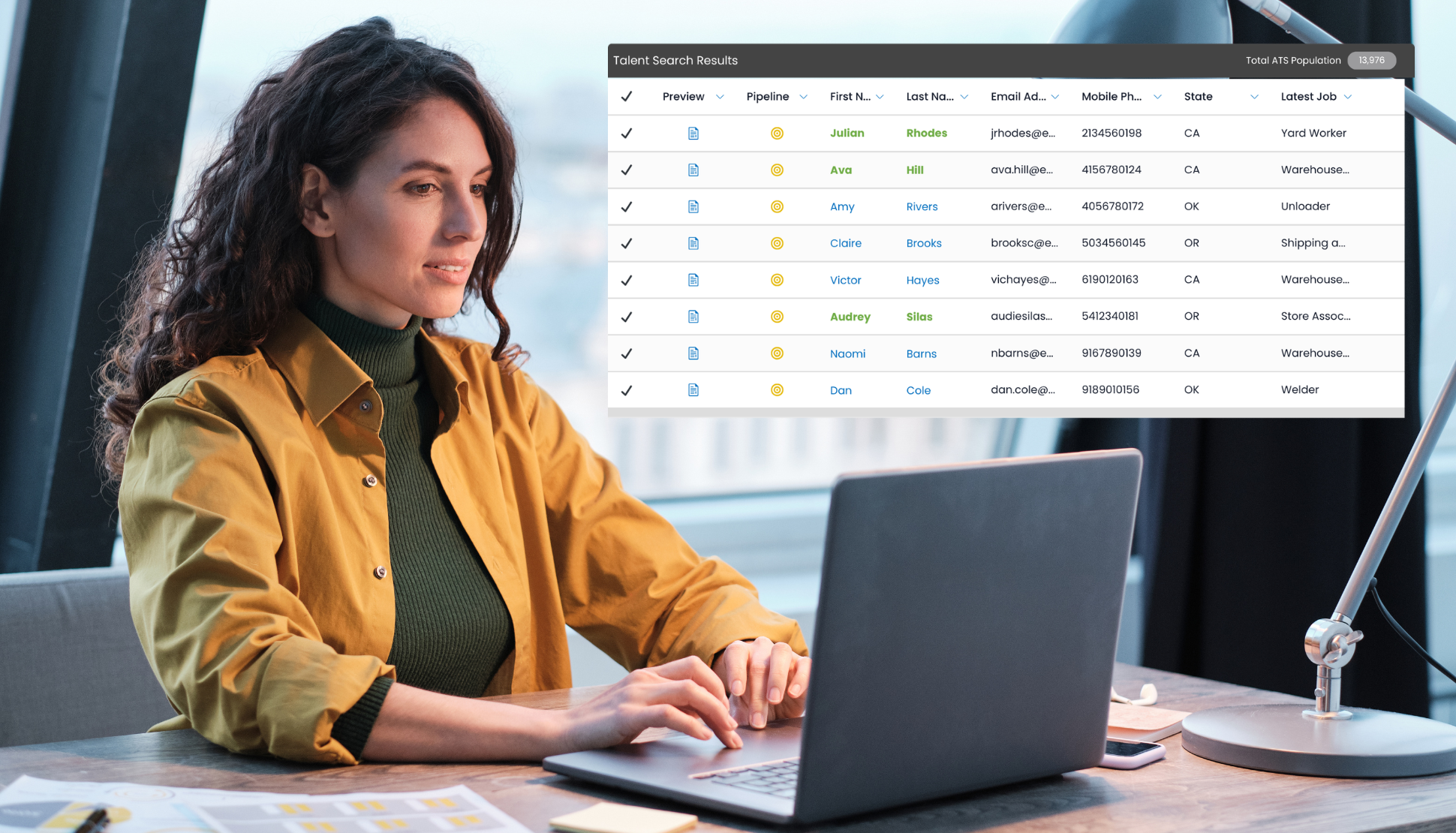
AviontéBOLD’s saved search functionality lets recruiters build dynamic shortlists with real-time criteria: assignments ending in the next two weeks, candidates who haven’t been contacted in 90 days, and workers with a specific skill set and a current availability window.
Instead of starting from scratch when a req comes in, you have a prebuilt pipeline ready to act. The database stops being a filing cabinet and becomes a sourcing engine.
-
Automated engagement that runs across the talent lifecycle.
AviontéBOLD’s Talent Engagement feature handles outreach cadences that no recruiter has time to run manually. Lifecycle-triggered messages, timed to where a worker is in their journey, keep your agency present without adding to the team’s workload.
An assignment ending? A configured trigger fires a check-in before the worker starts looking elsewhere. A candidate dormant for 60 days? An automated re-engagement goes out without anyone touching it. And when a new applicant comes in, Avionté PIXEL can connect them to an AI interview bot instantly, qualifying them before a recruiter ever picks up the phone. This isn’t blast messaging. It’s targeted, context-aware engagement built on the data already in your system.
-
One conversation thread, not five fragmented touchpoints.
Fragmented communication is one of the fastest ways to lose a candidate’s attention. When messages are spread across email, texts from two different recruiters, and a voicemail with no history, context disappears, and follow-ups fall through.
Avionté Chat brings all candidate communication into a single unified channel with SMS fallback and a full conversation history tied to the candidate record. Recruiters see the full picture. Candidates get a consistent experience that feels like a relationship, not random outreach.
-
Push notifications that keep your agency top of mind.
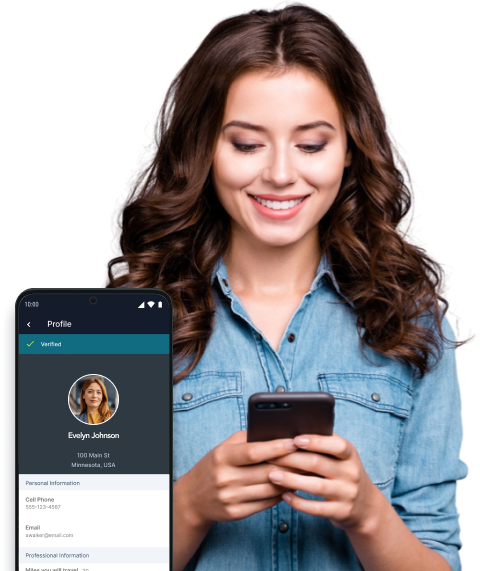
Avionté 24/7, our comprehensive mobile app for talent, delivers job matches, schedule updates, and pay information directly to workers’ phones, allowing candidates to access the information they need without the hassle of contacting the agency. When a role opens that fits a candidate’s profile, they learn immediately, rather than after they’ve already picked up a shift through a competitor’s app.
Staying visible in a candidate’s daily routine is one of the most underrated retention strategies in staffing, and it’s largely automated once the platform is in place.
Building a Talent Pool That Drives Redeployment, Referrals, and Retention
The staffing agencies growing in 2026 aren’t just using their databases as a shortcut for sourcing. They’re treating them as the foundation of a talent community, designed to drive redeployment, generate referrals, and reduce reliance on job boards over time.
That shift requires more than better technology. It requires a different operating model: reaching out before a role opens, rather than scrambling when one appears; maintaining relationships between placements, not just during them; and treating redeployment rate as a core KPI, not an afterthought.
This year’s StaffingHub report makes it clear where this leads. Agencies with owned sourcing channels, structured operating practices, and consistent engagement infrastructure are outperforming the market, not because of company size or recruiter headcount, but because of how they’ve built their systems.
Job boards will always play a role. But if they’re your primary sourcing channel, you’re competing on someone else’s platform for candidates who have little reason to return to you. The agencies building for the future are investing in the relationship infrastructure that makes job boards a supplement, not the foundation, of your sourcing strategy.
There’s also a client-facing dimension to this that many agencies overlook.
When you build a loyal, redeployable talent pool, you’re not just lowering sourcing costs or improving operational efficiency. You’re creating a competitive advantage that shows up in every client conversation.
As David Folwell, founder of StaffingHub, puts it on a recent episode of Avionté: Digital Edge: “As we move into a world where everybody has access to the same talent on the same job boards, and everybody can use the same AI sourcing tools on those job boards, the agencies that win will be the ones that can answer the question: what are you doing that’s unique to your agency? Often, that comes down to the talent pool you’ve curated and built over time — the one you have access to that your competitors don’t.”
Imagine being able to walk into a client meeting and confidently say that your talent isn’t sourced from the same job boards everyone else is using. It’s a curated network of workers who know your process, have a track record with your agency, and are ready to redeploy. That’s not something a competitor relying primarily on job board sourcing can offer.
It’s the difference between presenting yourself as a vendor and positioning yourself as a strategic partner with access to talent the market can’t replicate. It’s the difference between competing for talent and owning the relationships that bring talent back.
The tools described above — AviontéBOLD Saved Searches, flexible Talent Engagement features, Avionté Chat, and Avionté 24/7 — help agencies operationalize that strategy. Built on a single system of record, they enable consistent talent engagement, support redeployment, and build an owned talent network that grows more valuable over time.
If your agency is serious about reducing job board dependency and improving redeployment rates, the conversation often begins with a platform audit: understanding what’s working today, where friction exists, and what opportunities may be hidden within your current process.
We’d be happy to walk through how agencies use these tools to strengthen talent engagement, increase redeployment, and build a more sustainable sourcing strategy. Let’s talk.
Next Steps
We’d be happy to walk through how agencies use these tools to strengthen talent engagement, increase redeployment, and build a more sustainable sourcing strategy. Let’s talk.
Key Takeaways
- Your database is already your best sourcing channel — it’s just underutilized. Candidates who’ve worked with your agency are warmer, faster to place, and more loyal than those sourced from a job board. The gap isn’t in candidate quality; it’s in consistent engagement between placements.
- The data on owned sourcing is clear. According to the 2026 State of Staffing Report, 50% of growth agencies rely entirely on owned channels for sourcing, while 73% of flat- or slow-growth agencies still include job boards among their top three. The correlation between sourcing mix and growth is one of the report’s clearest findings.
- Redeployment is your highest-leverage metric, yet nearly half the industry isn’t tracking it. Placing a worker you already know costs less, fills faster, and builds the referral relationships that owned sourcing depends on. If you’re not measuring the redeployment rate, you can’t improve it.
- Unified communication is a retention strategy. Fragmented outreach across channels, with no shared history, is one of the most common reasons candidates stop responding. A single communication thread with a full record of history changes the candidate experience — and the fill rate.