At a Glance
Finding qualified talent is only half the battle. Staffing agencies also must reach candidates before they lose interest, make it easy to get started, and stay in touch when the next opportunity comes along. The right technology helps recruiters do that without adding more work to an already busy day.
A candidate applies for a job at 8:47 p.m. By 8:52, she’s already wondering whether anyone will respond.
Maybe that sounds impatient, but if she’s looking for work, why should she wait until tomorrow to hear from an agency when another might be ready to talk tonight?
That’s the reality staffing agencies face. Candidates don’t see the internal processes, recruiter workloads, or disconnected systems that can slow things down. They see an application that went nowhere, an unanswered text, or an onboarding process that seems to take forever. And they make their next move.
Agencies can offer great jobs, competitive pay, and experienced recruiters, yet still lose good people simply because they were too slow to connect.
Technology can help close that gap. Not by replacing the recruiter or turning every interaction into an automated message, but by making it easier to respond, answer questions, advance candidates, and pick up the conversation when another opportunity opens up.
Here’s where that makes the biggest difference.
Why Is Attracting Top Talent Harder for Staffing Agencies in 2026?
Finding qualified candidates has always been a challenge. Keeping them engaged long enough to make a placement is another challenge.
Today’s candidates have multiple ways to find work and little incentive to stick with an agency that makes the process difficult. Meanwhile, recruiters are juggling open orders, client expectations, interviews, onboarding, and a growing volume of applications, many of which may not represent qualified candidates.
The pressure builds in the gaps between steps. Someone applies but doesn’t hear back. A qualified worker completes an assignment, but no one contacts them about the next one. A candidate asks about a shift and receives an answer after they’ve accepted a different job.
These aren’t necessarily major failures. They’re ordinary moments in a busy staffing operation. But they’re also opportunities for another agency to get there first.
| Where candidates get stuck |
What helps |
| They can’t easily apply from their phone |
Mobile-friendly job search and applications |
| They don’t know whether anyone received their application |
Immediate confirmation and timely follow-up |
| They have questions but can’t reach anyone |
Two-way texting and accessible communication |
| They encounter delays during onboarding |
Digital forms, signatures, and document uploads |
| Recruiters overlook qualified people already in the database |
AI-assisted candidate search |
| They finish an assignment and hear nothing about what’s next |
Connected records and proactive outreach |
The common thread isn’t just convenience. It’s momentum. Candidates want to know where they stand and what happens next.
That’s why response time deserves more attention than it often receives. A job posting creates interest, but the first conversation is where an agency can turn that interest into a relationship.
How Can Staffing Agencies Respond to Candidates Faster?
Start with a simple question: How long does it take your agency to respond when a candidate applies after business hours?
If the answer is not until the next morning, consider what happens in the meantime. The candidate may be applying elsewhere, comparing offers, or accepting the first assignment that offers a clear path forward.
Automated first contact can help. A text or chatbot can confirm that an application was received, answer common questions about pay or location, and explain the next step. That first response doesn’t need to be elaborate. It needs to be timely and useful.
The next part is just as important: candidates need a way to continue the conversation.
Text messaging gives people a convenient way to ask questions and respond around their schedules. Automated reminders can help keep interviews and onboarding on track. When messages are recorded alongside the candidate’s information, recruiters can see the conversation history rather than reconstructing it from scattered texts, emails, and voicemails.
That last point matters more than it might seem. A candidate shouldn’t have to explain the same situation to two recruiters because the first recruiter is out of the office. And a recruiter shouldn’t have to search across multiple systems to determine whether someone has already been contacted.
Automation can handle routine steps, but it shouldn’t become a barrier between candidates and the people who can help them. An instant acknowledgment is a good start. A useful answer from a recruiter when the question gets more complicated is what makes the experience work.
The goal isn’t to automate every conversation. It’s to ensure a conversation doesn’t stall just because a recruiter is busy or out of office.
What Makes a Mobile Staffing Experience Worth Using?
A mobile app isn’t much of an advantage if candidates still have to call the branch for basic information or complete important steps elsewhere.
For staffing agencies, the value comes from giving candidates practical ways to manage their work without waiting for someone to help them.
A candidate should be able to find an opening, apply, complete onboarding, and access the information needed to start work on a phone. Once placed, that same worker should be able to check a schedule, review pay information, or look for another opportunity without starting from scratch.
Consider the difference between two experiences. In one, a worker needs to call the branch to confirm tomorrow’s shift and then send an email to request a pay stub. In the other, both answers are available on their phone. The second experience saves time for the worker and the agency and sends a message: We respect your time.
Digital onboarding can make a particularly important difference. Every extra form, office visit, or unclear instruction gives a candidate another reason to delay or abandon the process. When workers can complete required paperwork from anywhere, agencies can cut unnecessary back-and-forth and help qualified people get to work sooner.
Mobile communication also keeps the relationship active after placement. Timely notifications can alert workers to relevant openings or important updates without requiring them to keep checking in.
Of course, not every candidate wants to manage everything independently. Some will need help, clarification, or a conversation with a real person. Good self-service makes routine tasks easier while keeping the door open for personal support.
That’s the balance to aim for: fewer calls prompted by difficulty and more time for calls that truly benefit from a recruiter’s attention.
As Tom Erb, President and CEO of Tallann Resources, explained on an Avionté: Digital Edge podcast: “If you really think about what you do on a daily basis, we like to do self-serve. If I’m looking for a house, I may eventually pull in a real estate agent. But in the beginning, I’m going to be online and looking at realtor.com and Zillow and all that, and it’s kind of fun and it’s easy for me to do that. I don’t want to have to talk to a live person every time. I usually end up talking to a live person when I have an issue that I can’t solve via going online or doing it from my phone.”
How Can Staffing Agencies Use AI Without Losing the Human Touch?
Most staffing agencies already have a talent advantage in their databases. Past applicants, former employees, and people who were nearly right for an earlier opening may be excellent fits for roles they’ve never been shown.
The challenge is finding them quickly.
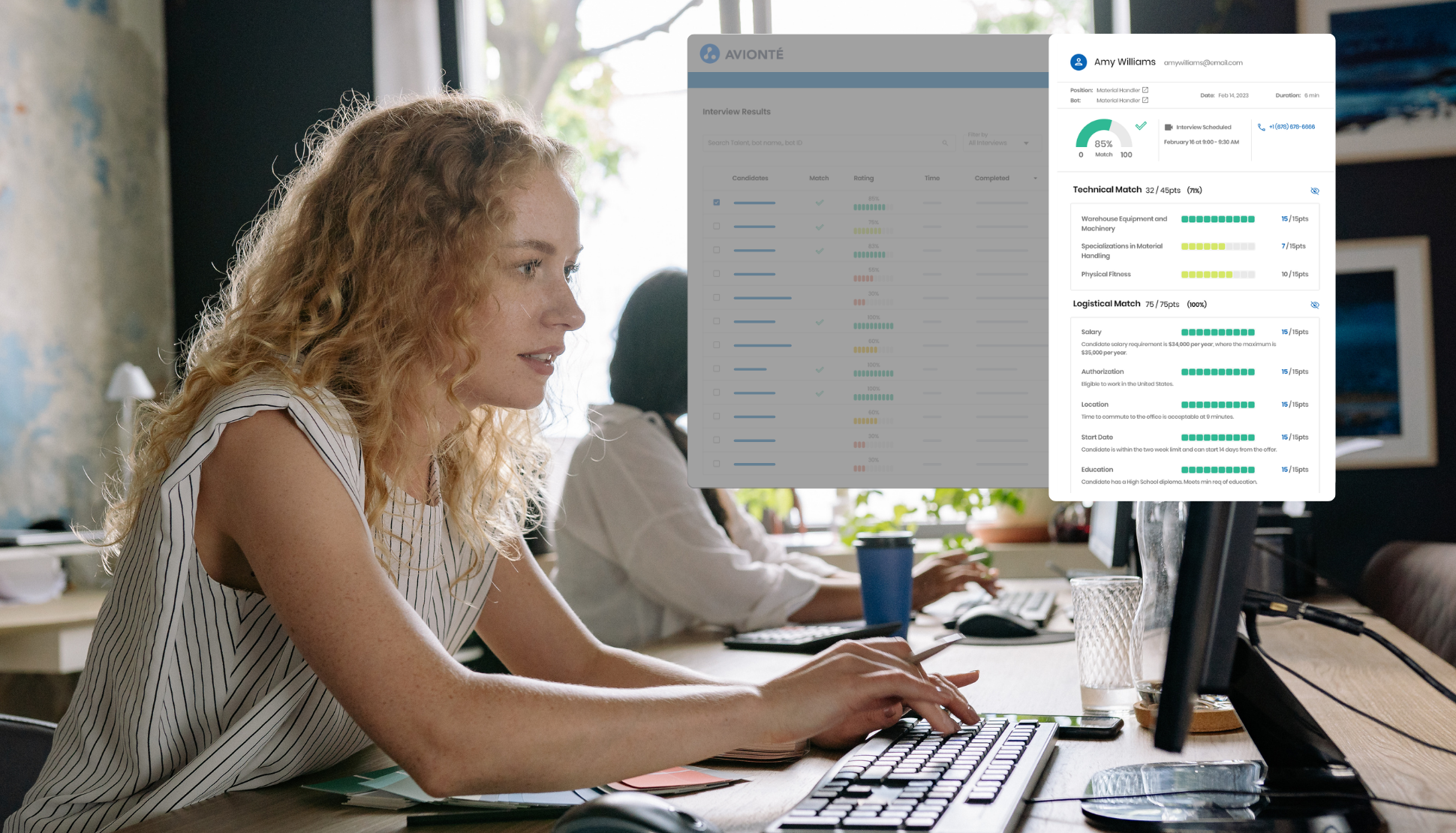
AI-assisted matching can help recruiters search existing records, compare candidate qualifications with job requirements, and surface candidates whose skills, experience, location, and preferences align with an opening. Instead of relying entirely on memory or manually reviewing records, recruiters get a more focused starting point.
AI can also summarize qualifications and flag potential gaps for review. That can shorten the time it takes to move from a large pool of applicants to a meaningful conversation.
But a match on paper is only part of the picture.
AI matching should never replace recruiter judgment. Its role is to surface potential candidates faster based on the skills, qualifications, and other criteria the recruiter provides. A recruiter may also know a candidate prefers a particular shift, wants a different type of assignment, or has experience not obvious from a résumé. Those details can make all the difference in determining whether a role is the right fit. AI helps narrow the search, but recruiters bring the context and discretion needed to make the final call.
Agencies also need to pay attention to the quality of the information they work with. As AI-generated applications and candidate misrepresentation become concerns, identity verification and appropriate security controls can help protect candidate records and client relationships.
The best use of AI isn’t to remove people from the process. It’s to help recruiters find the right people sooner, arrive at conversations better informed, and spend less time on repetitive searches.
That distinction matters because recruiting is more than matching qualifications to job descriptions. It’s about understanding what a person wants from their next assignment and whether an opportunity makes sense for both parties.
Technology can narrow the search. The recruiter makes the connection.
Can Faster Pay and Better Benefits Help Staffing Agencies Attract Talent?
Candidates pay attention to hourly rates, but the hiring experience can be just as decisive in whether they accept an assignment.
According to our latest Staffing Operations Report, 52% of candidates say they’ve declined a job offer due to a poor hiring experience. For staffing agencies, that has real consequences: a placement that falls through, a client left waiting, and a recruiter back to square one.
The experience doesn’t end when a candidate accepts an offer, either. Pay timing, access to earnings information, and how quickly questions are answered all shape how workers view an agency and whether they’ll return for another assignment.
Digital pay information, convenient payment methods, and faster-pay options, where available, can make the experience easier to navigate. So can clear communication. Workers shouldn’t have to chase down answers about hours, deductions, or payment dates, or wonder whom to contact when something looks wrong.
Of course, those conveniences depend on reliable back-office operations. Payroll accuracy, funding, compliance, and payment delivery must all work together. A polished digital experience means little if a paycheck is late or incorrect.
The takeaway for staffing agencies: every interaction shapes the candidate experience, and a poor one can cost you talent before a placement even begins. Making it easy for workers to get answers, access their earnings, and resolve issues builds the trust that brings them back.
How Does Connected Staffing Technology Help Agencies Keep Talent Coming Back?
The end of an assignment shouldn’t be the end of the conversation. In many cases, the next opportunity to fill a job is already within an agency’s existing workforce. The question is whether anyone knows when to reach out.
That becomes difficult when recruiting, payroll, and talent information are stored in separate systems. A recruiter may not know an assignment is ending. Another team may have the details needed to resolve a worker’s question, but that information never reaches the person handling the relationship. A candidate who has already worked successfully with the agency gets treated like a stranger.
When systems share information, agencies can close these gaps and do more to keep talent engaged. Automated notifications can alert workers when relevant job opportunities become available or remind them to update certifications and other credentials as needed. Rather than relying on recruiters to remember every follow-up, agencies can keep workers informed and help them stay ready for their next assignment.
Recruiters can also view relevant work history and availability, pick up where previous conversations left off, and identify opportunities to reconnect with workers nearing the end of an assignment. Workers are less likely to be asked for information the agency already has, and recruiters can make outreach timelier and more relevant.
The benefits extend to decision-making. Reporting on candidate sources, response rates, time to fill, and other operational metrics helps agencies pinpoint where candidates drop out and which recruiting efforts deliver results.
That gives leaders a way to investigate practical questions. Are applications coming in but not leading to conversations? Are onboarding delays holding up starts? Are qualified workers finishing assignments without being considered for the next one? Are outdated credentials keeping otherwise qualified workers from being placed?
The answers can help agencies improve the process rather than simply adding more tools or asking recruiters to work faster.
Connected technology is most valuable when it helps an agency remember what it already knows about its people and act on that information at the right time.
That is especially important in staffing, where a candidate may move between assignments, clients, and periods of availability. Keeping workers informed about new opportunities and upcoming credential requirements helps agencies stay connected between placements, making it easier to bring proven talent back when the next good fit arises.
What Should Staffing Agencies Prioritize to Attract and Retain Talent?
Agencies don’t need to adopt every new technology at once. Start by identifying where candidates experience the most friction and where recruiters lose the most time.
Ask a few questions about your current process:
- How quickly do we respond? Look at the time between application and first contact, including applications received outside business hours.
- Where do candidates get stuck? Identify the steps where people abandon applications, delay onboarding, or repeatedly contact the branch for basic information.
- Can recruiters find the right people in our existing database? Assess whether candidate information is searchable, up to date, and available when a new job opens.
- What happens when an assignment ends? Determine whether recruiters have the information and processes to contact qualified workers about suitable opportunities.
- Can we identify where the process breaks down? Use operational data to pinpoint bottlenecks, rather than relying on anecdotes or adding tools without a clear objective.
These questions help agencies align technology decisions with real operational problems. They also make it easier to evaluate whether a new tool improves the candidate experience or simply adds another step for recruiters to manage.
The objective isn’t to have the most technology. It’s to build a process that helps the right people connect with the right opportunities, with less waiting and fewer unnecessary handoffs.
How Avionté Helps Staffing Agencies Keep Talent Connected
Finding great talent is one thing. Getting them to respond, making it easy to get started, and giving them a reason to come back? That’s where the real work begins.
Avionté connects front-office and back-office operations with technology that helps agencies keep talent moving forward. Avionté PIXEL uses AI-driven chat and automated messaging to pre-screen applicants and initiate interviews. Avionté CHAT makes it easier for recruiters and talent to connect via the app or text, with conversations saved to the talent record.
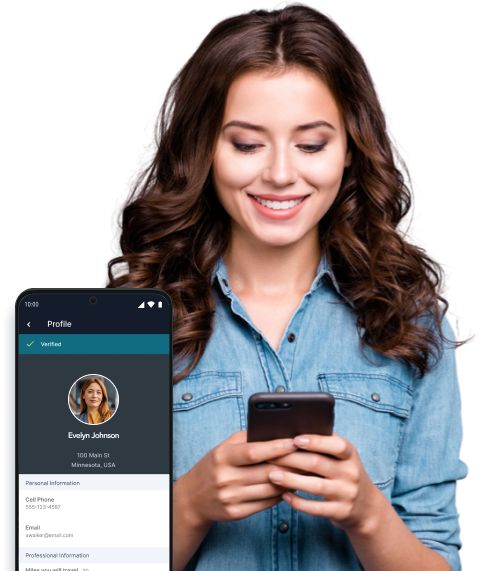
Avionté Mobile gives workers one convenient place to find and apply for jobs, get alerts about new opportunities, check schedules and pay information, complete digital onboarding, and receive important updates. Quick-start login makes it easier to access the app, while self-service tools put routine answers at workers’ fingertips and reduce callback wait times.
Behind the scenes, agencies can also manage configurable onboarding workflows, track recruiter activity, and receive talent status notifications, with information integrated with the recruiting and payroll platform their teams already use.
The point isn’t to add more technology for its own sake. It’s to remove delays, missed messages, and unnecessary hurdles that push good candidates elsewhere.
Your competitors aren’t just competing on pay rates or job openings. They’re competing on the experience you provide your talent. And sometimes, the difference between winning a great worker and losing them is simply how easy you are to reach.
Want to see Avionté in action? Schedule a demo to see how Avionté can help your agency create superior talent experiences.
Key Takeaways
- Respond Before Candidates Move On. Fast follow-up and automated messaging help agencies keep candidates engaged before another opportunity catches their attention.
- Make Every Step Easier on Mobile. Mobile job search, digital onboarding, and self-service access help candidates move from application to assignment without unnecessary hurdles.
- Let AI Narrow the Search, Not Make the Call. Use AI to surface potential matches faster, while recruiters apply their knowledge of each candidate’s skills, preferences, and experience to make the final decision.
- Stay Connected Between Assignments. Connected recruiting, payroll, and talent data help agencies recognize returning workers, share relevant opportunities, and keep credentials up to date instead of starting from scratch.
- Make Pay Part of a Better Talent Experience. Clear pay information, access to earnings details, and reliable communication help build trust beyond the initial job offer.