At a Glance
Light industrial agencies don’t lose talent at placement. They lose it in the silence after the assignment ends. This guide shows how a staffing-native mobile app closes that gap with faster applications, mobile onboarding, and steady contact between assignments, so more workers come back for the next one.
The placement was a success, but retention failed the moment the assignment ended.
Picture Marcus, a warehouse associate whose six-week assignment at a distribution center ends in four weeks. On Friday, his recruiter texts: “We’ll be in touch.” Marcus heads home.
By Monday, he’s back on the job boards. By Wednesday, he’s applied to a competing agency’s forklift opening from the driver’s seat of his truck. It takes less than five minutes. On Thursday, your agency posts a nearly identical job. Marcus never sees it.
Your recruiter did everything right. Found him. Screened him. Placed him. Kept him working. But when the assignment ended, the connection went quiet. In that silence, another agency secured his next placement.
You didn’t lose Marcus because you couldn’t find him a job. You lost him because someone else found him first.
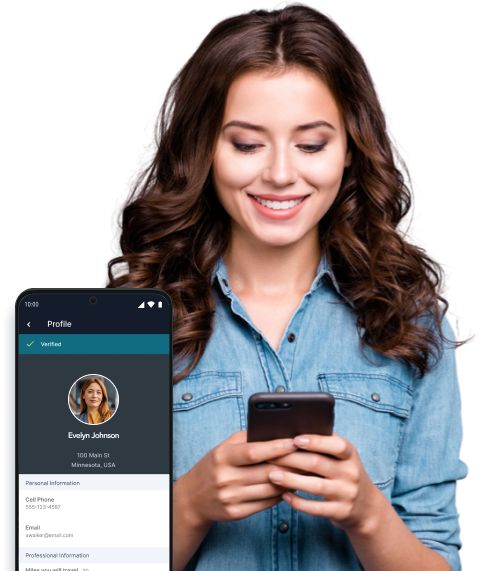
That’s the retention gap mobile staffing apps are designed to close. Avionté Mobile, formerly Avionté 24/7, gives talent one place to apply, onboard, check schedules, view pay, and discover their next opportunity, while every action feeds back into your system of record.
The next placement shouldn’t depend on whether a worker remembers to check in. It should depend on how easy you make it to come back.
Why Does Light Industrial Staffing Have a Retention Problem?
Light industrial has a retention problem because the work is inherently temporary. Assignments are short, demand swings with production cycles, and workers have more openings to choose from than ever. When an assignment ends and the agency goes quiet, talent moves on.
The numbers show what that costs. The 2026 Staffing Industry Loyalty and Referral Benchmark from StaffingHub found that referred light industrial candidates worked 64 median lifetime days, compared with 36 for job board hires. That 78% gap points to something every recruiter knows: the stronger a worker’s connection to your agency, the longer they stay.
The same benchmark found that hires from agency career sites showed up and performed better than those from major job boards across every vertical it studied. The channel wasn’t different. The relationship behind the application was.
The agencies that solve retention don’t rely on a recruiter’s memory or a late-night text thread. They maintain steady, low-friction contact from the first application through every redeployment. The sections below identify where that connection breaks and how to rebuild it.
Where Do Candidates Drop Off, and How Does Mobile Fix It?
Every extra step gives a candidate another reason to give up.
Long forms. Forced account creation. When applying for a job feels like work before work even begins, candidates move on. A mobile staffing app shortens that path, making it easier to go from spotting an opportunity to applying for it.
The research shows why that matters. In Glassdoor’s analysis of 12 million U.S. job seekers, 63.1% of transportation job seekers and 60.2% of retail job seekers searched for jobs on a mobile device, compared with 35.3% in software development. The same analysis found that promoting a job as mobile-friendly increased applications started by 11.6%.
Speed matters, too. Appcast data shows applications candidates can finish in under five minutes convert at 12.47%, compared with 3.61% for those that run past 15 minutes.
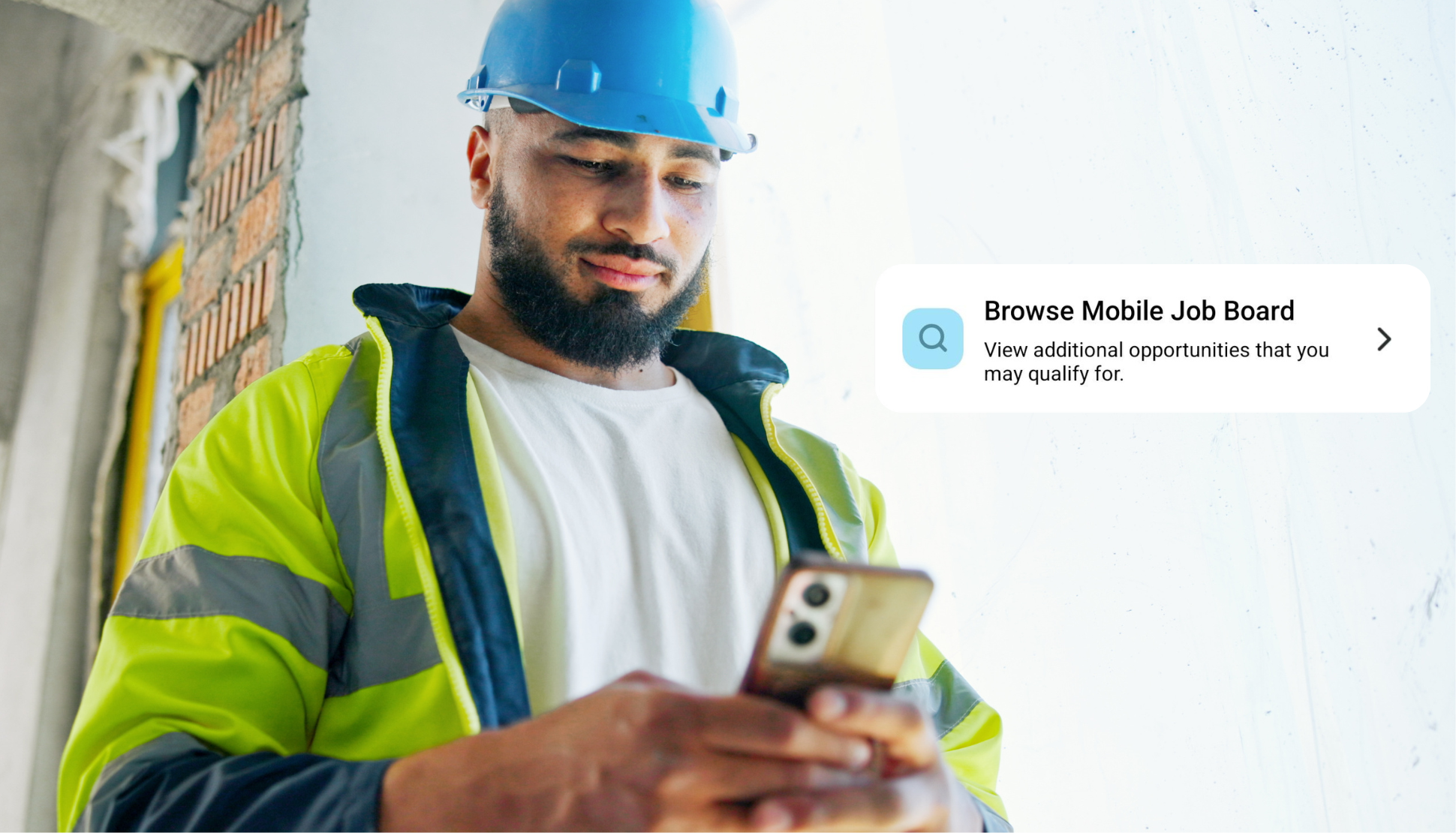
Avionté Mobile makes that next step easier. SmartLink sends your branded app to talent by text or email, so they can get started with a tap instead of hunting for an app to download. From there, candidates can search the mobile job board, apply for openings, and receive confirmation in minutes.
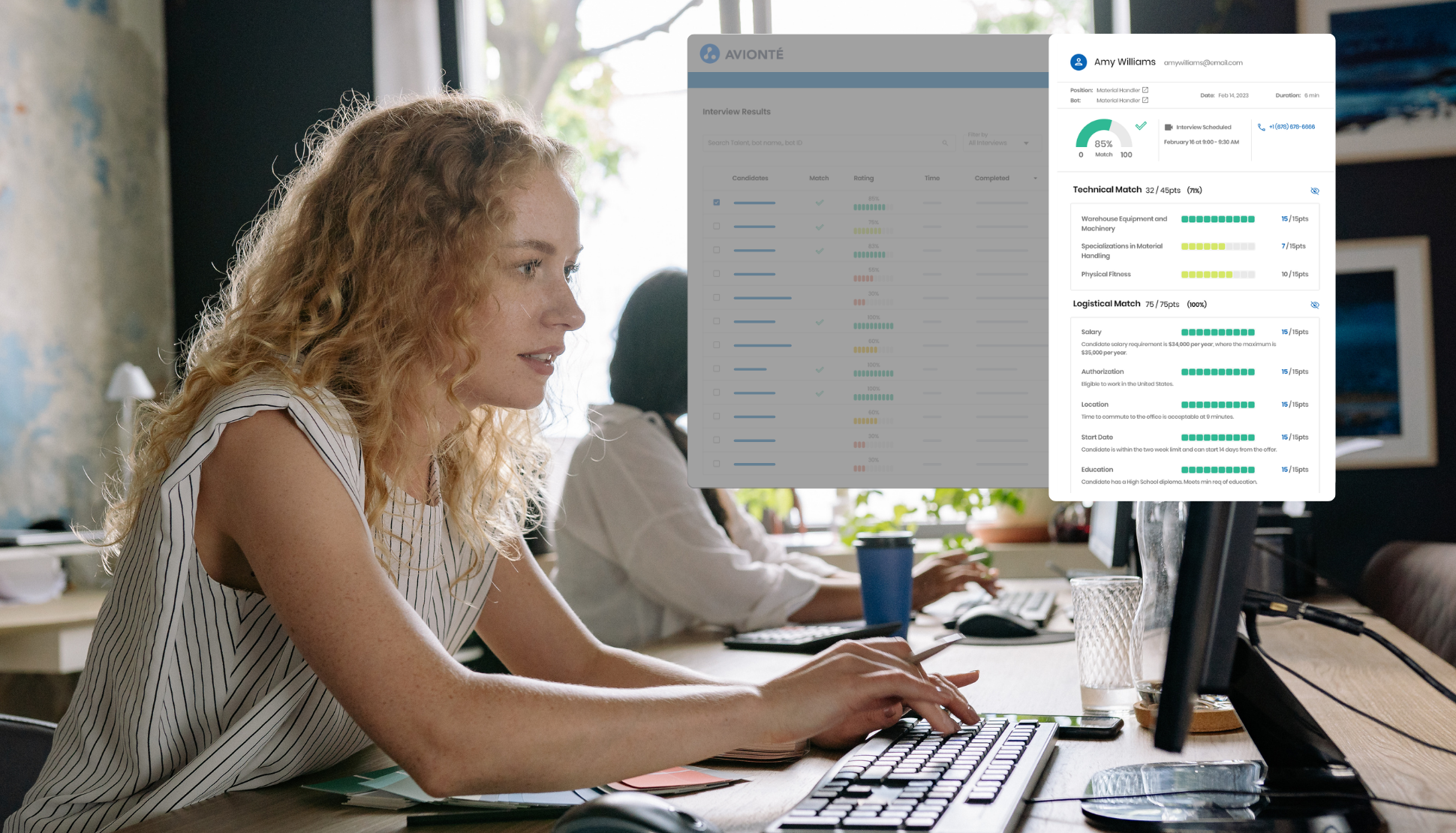
And an application shouldn’t disappear into a disconnected system. Avionté Mobile connects directly to your staffing platform, so every application and availability change flows into AviontéBOLD, the same system of record your recruiters use to fill orders. Your talent database stays current without recruiters re-entering information.
The easier you make it to apply today, the easier it is to put that talent to work tomorrow.
What Role Does Mobile Onboarding Play in Worker Retention?
Mobile onboarding keeps workers from accepting a competing offer before their first shift. Many agencies lose talent they already found during onboarding. Paper packets, in-office signing, and days of waiting between offer and start create a gap, and workers fill it with other offers.
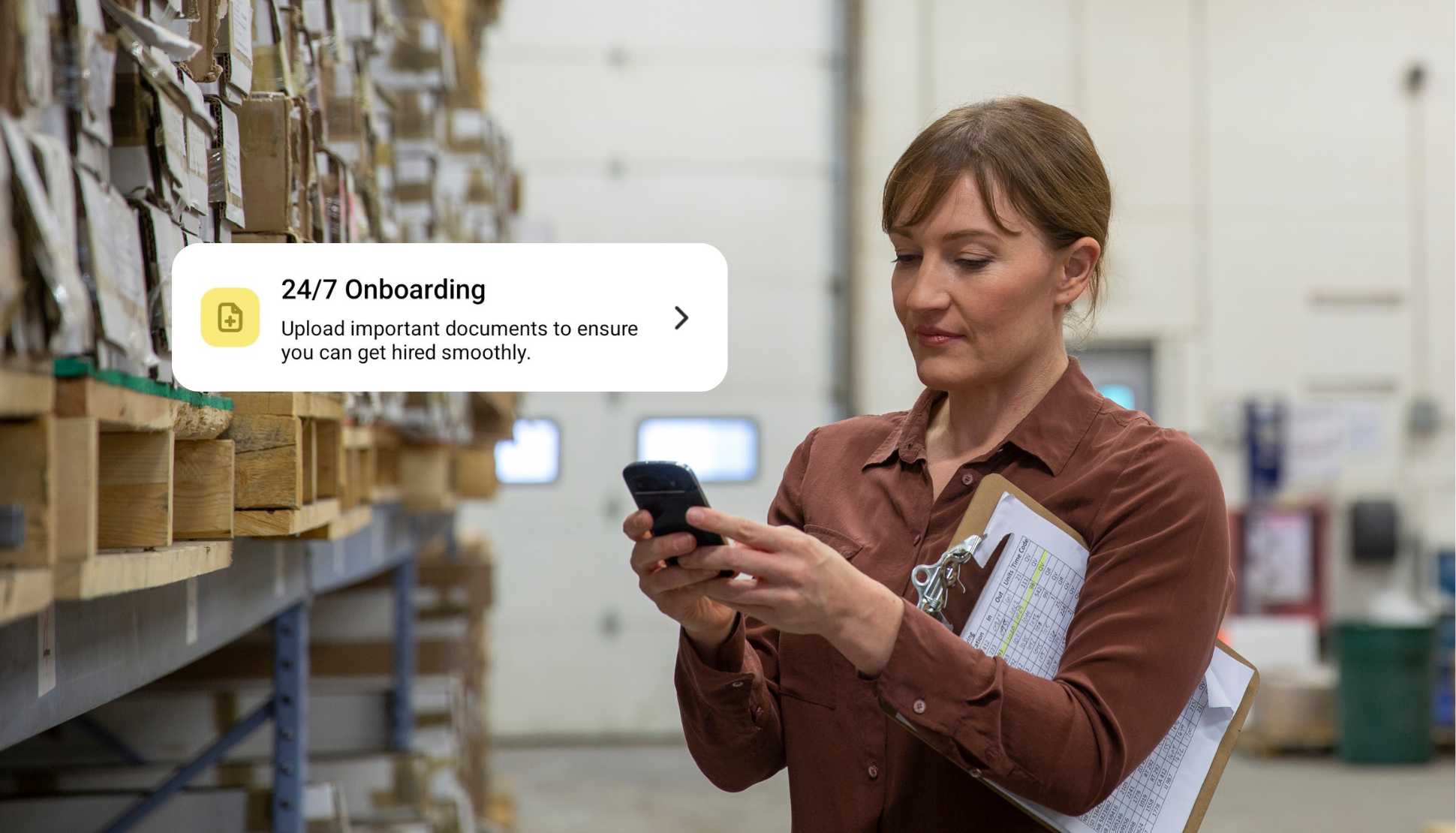
Mobile onboarding closes the loop. Workers complete forms, upload documents, submit ID, and e-sign from their phones on their own time. Your team reviews submissions in real time, and workers reach assignment-ready status faster. The goal is simple: engage talent from day one, not day ten.
Avionté Mobile onboarding connects directly to the compliance and payroll workflows in AviontéBOLD. When a worker completes onboarding on their phone, the data is already where recruiters and payroll need it. Assignment details, including location, attire, contact, and arrival time, are ready in the app before the first shift, so nobody spends Monday morning chasing paperwork or answering, “Where do I go?”
How Does Staying Connected Between Assignments Drive Redeployment?
Redeployment is where retention starts paying off. Workers are more likely to return to the agency that reaches them first with the right opportunity. Your redeployment rate measures the share of workers who complete one assignment and accept another through your agency. The payoff is twofold: more repeat placements and lower costs, since bringing back a proven worker costs a fraction of what it takes to source, screen, and onboard someone new.
Remember Marcus? If his phone had buzzed Saturday morning with a forklift opening that matched his skills and pay expectations, he might have opened your app instead of a job board. Avionté Mobile helps agencies reach talent at that critical moment. Algorithmic job matching surfaces openings to best-fit candidates, automated notifications alert talent to opportunities in seconds, and Avionté Chat keeps two-way conversations going, with SMS as a fallback when someone hasn’t opened the app.
Technology can open the door to the next placement, but people keep workers coming back. The app provides the connection; your team builds the relationship. Two-way messaging works best when recruiters respond, answer questions, and help workers find their next assignment. The goal isn’t simply to send more notifications. It’s to ensure workers know your agency is ready when they’re ready to work.
The proof shows up in the results. The Job Center, a multi-state staffing agency, grew job fills by more than 70% within eight months of deploying its mobile app, and its talent users climbed from just over 20,000 to more than 58,000 in under a year. “This has boosted our redeployment rates, sped up hiring, and reduced job board costs,” says Nick Booth, Technology Lead at The Job Center.
Avionté also reports that agencies using its mobile app see redeployment rates two to three times higher than agencies relying on manual outreach alone.
Which Mobile App KPIs Predict Retention in Staffing?
The KPIs that predict retention measure what talent does after the download, not the download itself. Downloads and logins look good on a dashboard, but they don’t tell you whether workers finish applications, show up for shifts, or return for the next assignment. These five mobile app KPIs do.
| KPI |
What it tells you |
| Application completion rate |
How many candidates who start an application finish it |
| Onboarding completion rate |
How quickly talent reaches assignment-ready status |
| Time-to-fill |
How fast a requisition becomes a placement |
| Redeployment rate |
How many workers accept a second assignment |
| Fill rate |
How many requisitions you fill on time |
When these numbers improve together, the app is doing its job. When downloads climb but fill rates stay flat, the technology isn’t the problem. The gap is in how the agency uses it, and the KPIs show you exactly where to look.
Can Mobile Referral Programs Improve Retention?
Yes. Referred candidates outperform job board hires in lifetime days, assignments per candidate, and speed to first shift. A mobile app makes referral programs practical at scale. The 2026 Staffing Industry Loyalty and Referral Benchmark analyzed 882,004 placements across 443,182 candidates from January 2024 through December 2025, covering light industrial, healthcare, and travel nursing. Here’s what it found:
| Metric |
Referred |
Job board |
Difference |
| Light industrial: median lifetime days |
64 |
36 |
78% more |
| Healthcare: median lifetime days |
180 |
99 |
82% more |
| Travel nursing: median lifetime days |
174 |
116 |
50% more |
| Light industrial: assignments per candidate |
1.84 |
1.60 |
0.24 more |
| Travel nursing: assignments per candidate |
2.40 |
1.45 |
0.95 more |
In light industrial, referred candidates also reached their first paid shift three days sooner than job board hires. Across the benchmark, fewer referred candidates churned in the first few weeks. The advantage held across every vertical, indicating it comes from the relationship, not the role.
That matters because your best workers know other good workers, and the benchmark shows how concentrated that value is. The top 10% of ambassadors account for 53% of all referrals. High-volume referrers also convert at lower rates than one-time referrers, so the goal isn’t to push every worker to refer more.
The goal is to make sharing effortless for those who already share, then track which referrals become long-tenured workers. Learn more in our guide to talent engagement.
What Separates a Staffing-Native Mobile App from a Generic One?
A staffing-native app extends your system of record. A generic workforce tool may handle scheduling, but it rarely integrates with your agency’s recruiting, compliance, and payroll workflows.
| Generic workforce app |
Staffing-native app |
| Handles scheduling or messaging on its own |
Covers apply, onboard, schedule, pay, and chat in one app |
| Data lives in a separate system |
Every worker action updates the database recruiters and payroll already use |
| Recruiters re-key or reconcile information |
Applications, onboarding, and availability arrive ready to use |
| Generic branding |
Your agency’s brand on the app talent opens every day |
That’s the idea behind Avionté Mobile (formerly Avionté 24/7). Talent gets one app to search for jobs, onboard, check schedules, view pay history, pull pay stubs and tax forms, and chat with your team. Behind the scenes, AviontéBOLD connects front-office recruiting with back-office payroll and billing, so each tap in the app keeps your data current. That connection drives redeployment, fill rates, and long-term retention, and it gives you a foundation for boosting mobile app adoption across your talent pool.
Want to see it in action? Explore Avionté Mobile, and we’ll walk you through how it fits your workflow.
In Conclusion: The Silence Is Your Real Competitor
Pay may get workers in the door, but it takes more than a paycheck to keep them coming back. In its 2024 Talent Insight Survey, CoWorx found that growth opportunities ranked just behind desired pay as a reason talent chooses to stay with a company. Workers want to know what’s next, feel connected to their colleagues, and see opportunities beyond their current assignment. When workers can envision a future with your agency, they have a reason to return.
Now rewind to Marcus’s Friday. Same distribution center. Same four weeks. Same last shift. But this time, his phone buzzes Saturday morning with a forklift opening that matches his certification, including the pay rate and start date. He applies, and by Monday he’s onboarded for his next assignment. No job-board search. No competitor getting there first. No lost connection.
The assignment ended. Your agency didn’t lose the worker.
That’s the difference between filling jobs and building a workforce that keeps coming back. Every assignment has an end date. Your relationship with the worker shouldn’t.
See Avionté Mobile in action.
Key Takeaways
- Treat the end of an assignment as the start of the next one. Workers begin looking for work the moment a placement ends, so the agency that reaches them first usually wins them back.
- Cut the friction from applying and onboarding. Every extra form, account, or office visit gives a competing agency a chance to win the worker.
- Give talent a reason to keep opening the app. Matched job alerts, pay information, and two-way chat bring workers back. A download alone doesn’t.
- Measure what happens after the download. Track application completion, onboarding completion, time-to-fill, redeployment, and fill rate.
- Choose a staffing-native app. When the app feeds your system of record, every worker action helps your recruiters fill the next order.